Showing posts with label personal brand. Show all posts

The value of being an outsider


By Neil Patrick


The desire to conform to the expectations of a group is a primal urge for most people. Tribalism is underpinned by conforming to group norms. So being different sets us at a disadvantage – or an advantage if we choose to make it one.

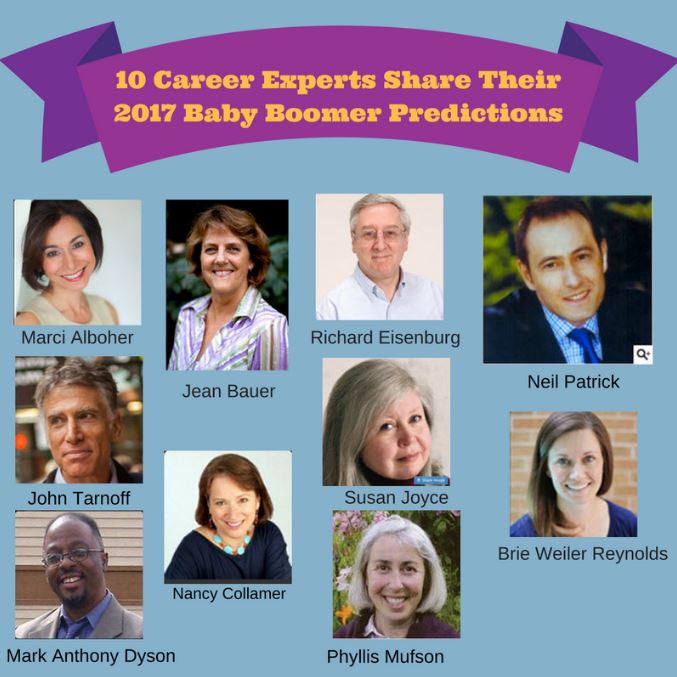
This week I was delighted to be quoted by Marc Miller of Career Pivot in Austin Texas in a post he put together with predictions from several career experts (and me) about the world of work for 2017. Mark had asked us all for our thoughts and I was happy to provide mine.

You can see Marc’s post here:


I was intrigued to see what others had said. My co-contributors were mostly well known to me and I have Skyped, emailed and collaborated with Marc and many of them in the last couple of years. I respect them all and value their friendship towards me - the oddball.

I am the odd man out for at least three reasons:

  • I am a Brit not an American
  • I am not a careers coach, HR person, or recruiter
  • I have no officially recognised accreditations in this field

In fact my day to day ‘normal’ work has nothing to do with careers at all – I am by profession a marketing person.

I chose to set up this blog about the world of work because it interested me. No more. No less. Yet conventional wisdom is that a marketing person who blogs should blog about marketing.

Perhaps I made an elementary mistake. Or I didn’t…

I confess this is post-rationalisation (a dodgy habit at best).

But here’s the thing. I have ventured beyond my comfort zone, I have been stretched. I have learned new things. I’ve not been constrained by years of immersion in a topic. I have come at it like an over-excited kid for whom everything is new and interesting.

I have made many fantastic new friends along the way that I would never have encountered by sticking to marketing. I ask questions that if I knew better, I probably wouldn’t. My personal network has been enriched and diversified. My mailbox is constantly full of interesting things people send me for discussion.

And because I don’t share the same background as others in the field, I come at the subject from a different perspective. And as a marketing person, I know that being different has a special value of its own.

When we are young, it makes sense to focus our network building on our field of specialism. But when we are older and perhaps looking for something fresh and inspiring, we benefit more by venturing into new fields and delight in the discovery of new people and new things. And this restores the excitement in our work which we may have lost way back when.

All it takes is the courage to risk ridicule and rejection. But my experience is that like most fears, this terror exists only in our heads.

On reflection, I have no regrets at all.


The Perils of Facebookisation


My good friend Dr Gary Sharpe at Blue Dog Scientific coined a term the other day in a conversation with me.

It was “Facebookisation”.

He didn’t need to explain what he meant. It’s the spread of trivial, egotistical, self-obsessive social media content creeping out of Facebook and into other and often mainstream media.

It’s the idea that we are all celebrities and should try and emulate them.

Except, most celebrities are hardly good role models at least in social media.

At first, I gave it little thought. It was a nice term though and I mentally filed it away for future use.

Then this morning I saw a Huffington Post newsfeed that Michelle Mone, new Tory peer, successful entrepreneur and founder of Ultimo had recieved a Twitter backlash for "bragging" that she’d been given a ministerial car and driver whilst on an assignment in connection with her unpaid work for the government. (she’s working pro bono on the DWP’s work on stimulating entrepreneurialism).


Apparently, Michelle or more likely her media team, quickly took the tweet down and tweeted this in her defence:


At a time when Jeremy Corbyn’s authentic voice and humble, consultative, non-ego-centric approach is drawing millions of supporters especially amongst the young, we have to question whether the “Look how rich and successful I am” approach to personal branding is really valid in the 21st century.

I suspect this approach just inflames the rage of those who rightly or wrongly feel that ‘the system’ has dumped them on the scrap heap. Does presenting ourselves and showing people how wealthy and successful we are really enable them to achieve amazing things with their own lives?

I'd argue it does not because the faulty premise is that all any of us need to succeed is motivation. And because that is free, we can all access it from within ourselves.

But the real barriers to success are not insufficient motivation. They are things like education, access to resources, contacts, creativity, innovation and know how. Without these things, no amount of self-belief and aspiration will deliver success.

The other key requirement is personal credibility.

Humility, empathy and modesty are in my opinion at the heart of personal credibility. Bragging, narcissism and displays of wealth, influence and success are not.

Even if they are presented with a big grin and 'motivational' message.


10 tips to out-hip the hipsters


By Neil Patrick

It’s time for us to fight fire with fire. To stop being blindsided by youth’s purported technological superiority.

One of the most persistent and damaging beliefs held by employers is that older people are out of touch with modern technology. Often enough all they mean by this is that we don’t waste too much of our valuable time posting selfies on Facebook and playing Angry Birds on our mobile phones.

This surrogate ‘measure’ of technological prowess is an Achilles' heel for the young though and here’s why.

Young people are not more sophisticated users of social media than older folk. They are just more familiar with the platforms. And waste more time on them. I know. I see what they tweet about. And it’s mostly vacuous narcissistic drivel.

The most famous book on social engagement was written in 1936, by Dale Carnegie and it was called, “How to Win Friends and Influence People”. Is it still relevant? You bet. And because of the rise of social media, I’d venture it is even more relevant today than when it was written.


Dale Carnegie 1888-1955 


If you think your career is just about being good at your job, you are operating in a vacuum. If no-one outside your immediate professional network knows anything about you, you are essentially invisible to the world. And that’s not a good place to be when for reasons beyond your control you are facing a career crisis.

Jobs are about getting stuff done. About influencing. About results. Social media can help you with all these things more than you’d ever believe.

But only if you know how to do it right.

And doing it right isn’t about copying the ‘yoof’.

Time and time again, I find that employers believe that older hires are not as good as younger ones because they believe we are out of touch with the digital world. There is some truth in this too. Older people often have concerns about privacy and this excessively constrains their online activity.

But because this transformation is so pivotal, we cannot run away from it. We have to embrace it and deal with the rough edges. Denial and avoidance are not an option if you want to remain employable in the 21st century.


The good news is that it’s actually not that hard to out-hip the hipsters… and here’s how you can do it.

So here are my top 10 hipster beating ideas for anyone over 40 (and many who are younger) to show that you are more hip than the hipsters and more importantly a good deal more employable.

Put your social media to work for you

Did you know that the average Twitter account has less than 200 followers? Build your Twitter following to over a thousand and straight away, you’ll be perceived differently. 

Make your public online presence mainly about the work you do

Hipsters love to talk about themselves. They can’t help but post selfies of themselves having fun. Don’t copy this. Use your social media to show you are a serious professional.

Spread across multiple platforms

Start at the centre and work out gradually. Don’t leap onto every social media platform at once. Start with the core and gradually expand from there. The core is Linkedin and Twitter. After you are established there, dependant on what you do, then you might want to expand to YouTube, Pinterest, Facebook. 

Get connected

Do not pester people to connect. Be nice to them and slowly but surely they will reciprocate. Share other people’s stuff. Comment constructively. Be nice to others and they will be nice to you. 

Make your voice heard

No-one loves bullies, show offs or big mouths. So don’t be one online. Be more interested in others than yourself and it will get you further and faster.
 
Build online goodwill

It’s funny, but online relationships are actually not much different to real world ones. Help others out and ask for nothing in return. Most will be so shocked and delighted they will remember you if not forever, then certainly for longer than if you ignored them 

Know your numbers

Look at who you consider to be your peers in your professional realm. And your role models. There’s your benchmark. If you have bigger numbers than they do, you are leading your race not struggling to catch up. 

Understand the digital landscape

You don’t need to be a coder or a web designer to do this. As platform algorithms become ever more sophisticated, they are learning how to reward good online behaviour and punish the bad. The meek really shall inherit the earth (provided they are not so meek no-one knows they exist).

Help people solve problems

Every day I am contacted by people many of whom I have never met or even communicated with before. They ask me to help them solve their business problems. I am not a charity yet I never ask them to pay anything for my advice. I place a greater value on their goodwill than I do on filling my pockets. Some would say this is foolish and unnecessarily altruistic. I say that goodwill is more valuable than mere money.
 
Be interesting

Yoof cannot help but try and show the world how beautiful, fun and affluent they are. And guess what, no-one cares*. Their social media role models are the rich and the famous. But yoof has not recognised that different rules apply to these people. For better or worse, fame changes the game.

People like and are interested in people who like and are interested in them. Not people who are mostly interested in themselves and trying to impress others.


The beauty of this strategy is that you’ll kill at least two birds with one stone. First you will learn a ton of stuff. Second, you will be able to prove that you are right up to date with the digital world and critically that you know how to use it to create real influence.

Hipsters watch out! You are about to be outsmarted by those you jeered at.

*A 2013 study of Facebook users found that posting photos of oneself correlates with lower levels of social support from and intimacy with Facebook friends (except for those marked as Close Friends). The lead author of the study said that "those who frequently post photographs on Facebook risk damaging real-life relationships."


Why admitting personal failure is sometimes the best thing to do


By Neil Patrick

We all screw up from time to time. We're human. We make mistakes. Admitting to our weaknesses is hard. Yet sometimes it really is the best thing we can do.

Yesterday the UK charity Kids Company was declared insolvent and shut its doors. The evening TV news was full of scenes of inner city children howling in disappointment.

The charity was set up on 1996 to provide extra care and support for kids from the most troubled and disadvantaged backgrounds in inner cities across the UK. It delivered this support through a network of street level centres, alternative education centres, therapy houses and over 40 schools.

Kids Company told the government that it would close its services on 5 August 2015 less than a week after receiving a government grant of £3m. Yet despite this massive cash injection, the charity was still insolvent. It had no alternative but to close.

This was a charity which had enjoyed the patronage of many of the UK’s most high profile people from David Cameron to wealthy celebrities. The cash simply poured into Kids Company. During its lifetime, it received more than £25 million from the government, and another £4.25 million in early 2015. Prince Charles praised it. The band Coldplay donated £8 million. Richard Branson, J.K. Rowling, Jemima Khan, Credit Suisse, Morgan Stanley, John Lewis were all eager donors.

Kids Company’s founder and former Chief Executive Camila Batmanghelidjh was an archetype of the mantra that with passion we can achieve anything. Her motives, commitment and compassion are not in doubt. Neither is her ability to gain personal influence and profile. She became a brand.

Camila Batmanghelidjh in 2008
Credit: Garry Knight
Recognition and accolades flooded in. According to Wikipedia:

In 2009 Batmanghelidjh was named Businesswoman of the Year by the Dods and Scottish Widows Women in Public Life Awards. She has also received Ernst and Young's Social Entrepreneur of the Year award (2006), Third Sector Magazine's Most Admired Chief Executive (2007) and the Centre for Social Justice's lifetime achievement award in 2009. Batmanghelidjh has been awarded received honorary degrees and doctorates by several universities including York St John University, the Open University and Nottingham Trent University. In February 2013, she was named one of the 100 most powerful women in the United Kingdom by Woman's Hour on BBC Radio 4. In the same month, she was appointed an honorary Commander of the Order of the British Empire (CBE) for services to children and young people. In September 2014 she became an Honorary Fellow of UCL.

Some, notably senior civil servants, said she had also become untouchable and that the charity’s financial affairs were not well managed. When the continuation of government funding was made conditional on her stepping down from the role of Chief Executive early this year, her reaction was to play her trump card. She called David Cameron and asked him to overrule the demand. Which he did.

Yet the critics wouldn’t be silenced. There were reports from former employees that the charity was simply handing cash over to children. That its statistics about the real numbers of children it helped were exaggerated. That its management accounts were inadequately transparent.

These allegations were fiercely rebutted with all the passion Batmanghelidjh is renowned for. Yet no amount of rhetoric and robust defence could alter the fact that Kids Company was a financial train wreck.

Kids Company would never have existed were it not for the passion, work and talents of Batmanghelidjh. But here is a classic example of how these things alone and even the patronage of the most influential people in the land do not make us untouchable or able to sidestep the requirement for money to be properly managed. Especially when it is not our own.

Leaders must recognise their own strengths and weaknesses and if they are not so good at some things, make sure they delegate the responsibility to someone who is.

Batmanghelidjh is unrepentant. She blames civil servants and the media for her troubles. She seems unable to accept the reality that her personal credibility is at stake unless she accepts responsibility.

Sadly she has so far failed this real test of leadership. A true leader accepts that everything which happens on their watch is their responsibility and blaming others regardless of their failings can only reflect badly on us.

Such a simple gesture of humility and responsibility is what’s called for now if Batmanghelidjh wishes to be remembered as an innovative philanthropic entrepreneur, rather than a failed charity CEO.


How to get to love networking


By Neil Patrick

I always hated networking.

All those awkward conversations with strangers thinking, “I hope this is over soon and I can go and do some real work”.

But today I have completely changed my attitude. I network all the time and without it, I’d never achieve anything in my work.

Networking isn’t optional, or a chore, it’s a joy because I learned to change how I think about it entirely. And if you dread networking, or feel awkward, I hope these tips will get you out of the pain zone and into the gain zone.

Rather than thinking of networking as an "event", consider it an ongoing, lifelong process of building new relationships with people you actually like and want to be connected to.

Being a good networker gains you control of your life in ways which many people just don’t appreciate. I realised after many years of getting it wrong that networking means I can choose who I develop relationships with. And by the same token I can get away from those who for any reason I don’t like.

So lets’ get on with the eight tips that changed my whole experience of networking.

1. Focus on giving not getting

Golden rule number one, is that you are not there to get things from others. You are there to try and find out more about them and see if you can get along. Showing an interest in them makes it easier for others to talk to you. After all most people love talking about themselves. People do business with people they like, so let them do it. Relationships don’t materialise in a few minutes. They mature over time. Usually months or even years. So approach networking as a fact finding mission. Ask questions, be friendly and likeable and offer to help people out anyway you can. Never ask for anything from them in return.

2. Be visible

This was always a big problem for me. I always had a desk full of urgent things that I needed to get done. I thought that every networking event was robbing me of precious hours that I needed to do my real work.

But today there’s a great solution. I don’t go to many physical events. I probably do 80% of my networking from my desk. I connect with people on Twitter and Linkedin. But I also move dialogues offline as soon as possible. I Skype with people and we exchange emails.

This has a couple of huge advantages. First my network is global so I can connect with a lot of people, I’d never meet in the real world. And since I live in a forest in Wales, I’m not exactly surrounded by movers and shakers in business. Second, this is much more time efficient. There are no long drives to venues. No protracted schedules. I just fit things into my schedule when it suits me and save the face to face meetings for the times when the real business is being done.


3. Listen more than you talk

There’s a very old saying attributed to Greek philosopher Epictetus which goes something like “I have two ears and one mouth and I use them in that proportion”. This is great news if like me you tend to introversion. It has the great benefit that provided you ask good questions, the other person will do all the work AND you’ll be perceived as more empathetic and interested in others. Both great foundations for a good relationship in the future.


4. Think long term vs. short term

Relationships don’t just magically happen. They take time. Trust is earned slowly and consequently many people just don’t have the patience to nurture business relationships over time. But just as you can pick up instantly again with an old friend you’ve maybe not spoken to for six months, you can do the same with business relationships…provided you’ve already followed the first three points above. Moreover, I find that people I’ve maybe not had contact with for several months are often more pleased to hear from me than if we’d been in more regular contact.


5. Don't over commit or feel guilty

Never promise to do something you have doubts about delivering. This is serious trust-melter. But if you don’t have to the desire or capability to deliver what someone is asking for, you don’t have to give them a blunt refusal. Just tell them that your schedule won’t allow you to do what they’d like. This has the bonus of letting them know in a kind way that you are in demand and it may well prompt them to reconsider their request and reframe it in a way which makes it more palatable or attractive for you. Likewise, meeting someone does not commit you to keeping in touch. Never feel obligated to keep up a contact if for any reason, you feel it’s not right for you.


6. Be honest

Tell the truth. Always. If someone asks you if you know about something, don’t be tempted to say “yes” just to avoid feeling dumb. No-one expects anyone to know everything. And if I don’t know an answer to a question, I am quite upfront and say, “I don’t know”….often followed by something like, “But that’s a really interesting question, I’ll find out and get back to you”. And I always keep that promise. Not knowing something isn’t a problem – it’s an opportunity to learn and prove your worth and reliability to someone else.


7. Take action immediately

Everyone is busy these days. So look for ways to execute tasks immediately, rather than adding another job to your to do list. For example, just the other day I was on a Skype call and the other person said, “Oh you really should connect with my friend, you two would really have lots to talk about.” I agreed and the introduction was made via Twitter. In about 30 seconds flat! And it was true we did have a lot to talk about and have already scheduled a face to face meeting to do just that.


8. Only go to things that excite you

If you have a choice, don’t ever go to things that you think you should attend, just because of who else will be there. If the event doesn’t ignite your passion, you’ll not be on your top form and the event will sap you of the energy and spark you need to make a positive impression on others. In fact I have taken this mantra one step further and created my own local networking event with a couple of business friends. We all agreed there would be no agenda, no speakers, no rules. But it would be exclusive. Exclusive in as much as we’d only invite people we thought could add value and even more importantly that we liked and who we thought would welcome an informal business environment.

I used to hate networking, but today, I spend more time doing it than ever before. And it’s a genuine pleasure because I apply these rules. If you hate networking I hope they help you too.


What’s the best way to write your LinkedIn Profile?


By Neil Patrick

The web is full of opinions about the best way to write your LinkedIn profile. And they mostly make one big mistake. They assume that there is a single ‘correct’ way…

Last night I enjoyed a great debate with two friends who I think are well qualified to give an expert view about the best way to write a LinkedIn profile.

One has over 10,000 connections on LinkedIn, so you might call him a power user. The other is a full time professional resume writer and LinkedIn profile writer.

Our discussion was all about the best way to present a LinkedIn profile. Is there a single best way, or does it depend on the individual, i.e. different strokes for different folks?


Should it be written in the first or third person?

Of course we’ve all read and written a good deal about the best way to write a LinkedIn profile. We also have between us many years' experience of helping others with their profiles. So we compared notes and experiences and set out to debate some of these ideas and hopefully arrive at some fresh conclusions.

The debate started with the question, ‘What’s best, writing a LinkedIn profile in the first person, i.e. I am..., or the third person, i.e. he/she is...?

We focused not on the mechanics of content as an SEO-orientated writer might, but rather the impression a profile makes on its readers. At the core of this question is a dilemma:

How can we show off our accomplishments and expertise without sounding conceited and frankly like a bit of a jerk?

The first opinion that tumbled out was that if someone is making great claims about their successes, and uses the first person, then the reader is given one of two impressions. Either, if they have reason to trust the profile, they believe it and think “Wow, this person is a real high flyer”. However, if they are a more skeptical reader, they are inclined to think, “What an arrogant show off…I don’t believe half this stuff!”

But if we have genuinely achieved some amazing things in our careers, then it’s only right that we should present them on our LinkedIn profile. So how can we do this without appearing conceited?

Using the third person dissolves skepticism

We felt that in this case, using the third person is a better tactic. Whilst we still may never satisfy the biggest skeptics, at least our profile reads as if it were written by someone other than ourselves. So that’s a way to appear less conceited. The downside however is that it makes us appear less approachable and somewhat aloof. But if you have a great many outstanding achievements in your career, this may be the best compromise.

Facts are facts, adjectives are merely opinions

The second idea we debated was the issue of fact vs. opinion. I happen to believe that a fact-based profile is a good choice for those who have significant career accomplishments.

So what’s a fact-based profile? Well it contains nothing but simple facts of course. It doesn't have hyped-up meaningless adjectives like ‘driven, results-focused, inspiring, dynamic’. As I wrote about here, I think these words are really dangerous, unless they can be backed up by independent evidence.

If you say you are dynamic, what is your metric for measuring that? Compared to whom are you dynamic? Might it just be a lazy way of trying to spin the fact that, “I get bored easily, rush about and neglect details?" So the best way to turn this weakness into a strength is to say I’m ‘dynamic’? Sorry I’m not convinced!

So the second point is that adjectives are really risky. Careless use of ones which are simply there to puff up the impression you create can very easily do the exact opposite and just make you look arrogant and/or sloppy.

But I really am an authority and expert…

But let’s say you are a genuinely highly respected expert in your field and people think very highly of you. Well don’t say it yourself, use what others have said instead. Eg. ‘Described by xyz magazine as one of the foremost thinkers on renewable energies’. Doesn't that sound a whole lot better than, ‘I’m a leading authority and expert on renewable energies.’?

You might be thinking, "that’s fine, but no-one has written anything favorable about me ever." Really? I think you are deceiving yourself. Think back to your appraisals when you were given positive feedback. Remind yourself about how you were introduced last time you spoke at a big meeting or conference. Think hard enough and you’ll find plenty of true and relevant material.

It's a fact. Most people just don’t give enough thought to their profiles. They rush through them, eager to get on to the next task in their to do list. Don’t. Give it quality time and care. But don’t worry you have to get it perfect from the start. Make it as good as you can. And come back to it to refine it when you next have some downtime.

Early stage career people can still have content rich profiles

The third point was that for those people who are early on in their careers, they’ve simply not had enough time to rack up extensive accomplishments. But even so, there’s still plenty of keyword rich material you can use in your profiles. Like the name of the software you used on your final year college project; the name of the business you worked for in your summer vacation, the cities you spent time in during your gap year.

The bottom line we concluded is that there is no ‘correct’ one size fits all answer. And then because we all had beers in hand, our discussion turned to other subjects not so relevant to this blog!

So next time you read a load of tips about the best LinkedIn profile, I hope these points help give you some perspective. If you agree or disagree with anything in the post, do please post your thoughts in the comments below.


Linkedin reveals what the future holds for its users


By Neil Patrick

In my conversations with my business network a common question is, ‘What’s next for social media?’

There is so much hype and confusing information. Mobile will dominate. Big data is the future. Engagement will fall as platforms are forced to increase revenues and justify their share price. The biggest will kill the smallest.

It may be backed up by data trends, but this is all speculation. I don’t know the answer. But I do know this. Content has always been king. And now with the 2013 changes to the Google algorithm, called ‘Hummingbird’, unique high quality content, peer endorsement, interaction and others sharing your content are more critical than ever.

For professionals the number one platform is and I think will continue to be LinkedIn. But LinkedIn has its fair share of problems right now.

I've observed the transfer of what I call Facebook style content strategies to LinkedIn over the last year or two. You know, those endless ‘inspirational’ quotes, mathematical puzzles, pictures of lions.

If you like to share that sort of content, that’s up to you. But in my view, it does nothing but harm to your professional profile, on LinkedIn at least.

Why do so many people seem to ignore the fact that LinkedIn is professional social media platform? It’s not Facebook and it’s not Twitter. T-shirts and jeans are fine in these places. But on LinkedIn we should all be wearing our business suits.

Sharing your insight and expertise is the right thing to do. It doesn’t matter if it is super-specialised or niche. Your real peers will be interested in it, especially since our LinkedIn connections typically include a large number of connections who for whatever reason have something in common with us professionally.

And LinkedIn seems to be recognising this distinctive aspect of its social media USP. According to comments by LinkedIn co-founder Allen Blue made in a recent interview with Ian Burrell of The Independent, this is a critical moment in the evolution of LinkedIn. The idea is that professional people will offer their insights into the fields in which they have expertise, leading to valuable discussion and debate with their industry peers.


LinkedIn sees its future value being massively boosted by the creation of quality content from the most insightful, articulate and prominent people within its membership. And it is already cultivating content from this select few.

To date only 60,000 LinkedIn users have been invited to be LinkedIn authors, a tiny fraction of the 277 million worldwide membership. Many more will desire the opportunity to enhance their LinkedIn profile by being given the chance to publish their insights. LinkedIn has set up a “Waiting List” for the next tranche of authors.

At a higher level on LinkedIn’s publishing roster are the “Influencers”, an elite group that includes Barack Obama, David Cameron and Japanese PM Shinzo Abe. This list has been extended to “C-Suite” executives of large or prominent organisations and will, no doubt, be a holy grail for corporate PR people, envious of how Sir Richard Branson has already acquired a LinkedIn following of 4.1 million.

The irony here is that few of these people will actually produce their own content. Sure they may sign it off, but it will be a product of their PR teams, not their own personal work.

This development will potentially become a threat to established traditional publishers. Big name writers for newspaper comment pages now have a new platform where they can reach a coveted professional audience. Smart publishers, such as The Economist, The Washington Post and the Harvard Business Review, have spotted the opportunity on LinkedIn and are curating “groups” where their articles are discussed.

Blue believes this business-oriented content will find its way to LinkedIn rather than rival platforms, such as Facebook. “The difference is the professional context,” he says.

It also helps lessen the negative impact of troll-type interaction; the bane of many other social media platforms. The first authors on LinkedIn’s open platform have reported high-quality responses and interactions compared with the uninformed and even abusive responses which surface on other forums. “You will see hundreds of comments between commentators and the author,” Blue says.

Apparently, LinkedIn’s vision is that in time, all members will have the opportunity to become authors. Currently, all writers are unpaid, but it is likely, as more and more people recognise the value of such material, that large numbers of members will want to mark themselves out as industry opinion formers by posting articles that bolster the visibility and value of their Linkedin profiles.

The difficulty for many though will be over-strict company policies which have still not adapted to embrace the social media world. As I reported here, only 20% of firms surveyed by FTI Consulting, had policies which allowed employees to publish content on their LinkedIn profiles. This is perhaps the biggest obstacle for LinkedIn's vision and one which they can do little directly to overcome.

Blue says that LinkedIn has developed technology which ensures contributors cannot exploit it by writing articles that contain obvious marketing messages. The cherished “professional context” will act as a quality control on articles published.

“If you produce things that people don’t read, they’re not going to get distributed through LinkedIn; and if you produce things of low quality [the members] are going to tear you down in the comments,” says Blue. “People take what they read on LinkedIn very seriously and no one wants their time wasted.”

So just as the adoption of Hummingbird by Google has had a profound impact on the nature of web content, reducing the ranking power of spammy SEO tactics, this latest move by LinkedIn will I hope have a similar impact of the quality and value of content on LinkedIn.

And hopefully, the number of lion pictures in my LinkedIn news feed will reduce soon…


What can we learn from celebrities about playing the fame game?


By Neil Patrick

Yesterday’s post looked at how society has changed from the old economic top down system of class to a more diverse model and how the question of growing wealth inequality keeps rearing its ugly head.

And I presented a slightly tongue in cheek model of my own. At the top of this new socio-economic pecking order I placed what I called the ‘media magnets’. Celebrities as most would call them.

I’m not going to discuss whether or not Tom Cruise, Kim Kardashian, Tiger Woods or Paris Hilton are actually worth the vast sums that they are paid. It’s an academic argument which divides opinion and helps us not one bit even if we could all agree on an answer…which of course we never will.

What are the lessons that the rest of us can take from these people?

Forget the headlines about them earning a squillion dollars for some movie or selling their wedding pictures for $100,000. What I’m interested in isn't their headline-grabbing antics, but the more useful lessons that we can take from their strategies.

So if you want a piece about how you can earn a $10m pay cheque next year, please look elsewhere.

Fame I think comes with a heavy price attached anyway.

Who in their right mind would want to be photographed by stalking press photographers every time they go shopping or take a vacation? Who would want to have their personal family matters shared with the world through the mass media? Not me for sure.

So whilst being famous might seem superficially attractive from a purely financial point of view, being famous also carries a ton of baggage that personally I’d rather not have.

So what’s to discuss? Well, let’s look at a few aspects of the fame game that are worth paying attention to.
 
A lot of famous people can only do one thing

But they do it really, really well. If you are in the world's top 10 of just about anything you can imagine, you’ll be famous. Whether it’s putting a golf ball into a hole, or being the most annoying character on a reality TV show, being the number one at it has a value ticket attached. So lesson number one is that whatever you do, however specialist or even worthless it is, being the most renowned person in that field is the place you should be aiming to be.


Credit: Kevin Ballard

Becoming famous is about who you know more than what you know

Celebrities mix with other celebrities and the people that surround them, whether they are agents, media people, politicians. They are heavy socialisers. And because they socialise with other influential people, their personal networks have great value to them. Networking has a sort of randomness about it whoever you are, but the more you do it, the more likely you are to make a connection with someone which might just be your next big opportunity. 

Celebrities operate like brands

This aspect is finally starting to enter the mainstream consciousness, as people begin to see the value of strong personal brands. Just because you are never going to have a perfume line or fashion label named after you, doesn't mean that you shouldn't think of yourself as brand. This involves established branding techniques such as maintaining a consistent presentation, having a clear benefit based proposition and understanding which environments are suitable for your brand and which are not. And having a strong and positive online presence - in the right places for you to be seen.  It might for example not be such a good idea for a tax accountant to invest in building a Facebook page. A good LinkedIn strategy however is quite another proposition. 

Celebrities understand that to make a lot of money, you don’t just sell your time for money

Celebrities are masters of leveraging their value. They understand that they are not just selling their time - like everyone else they have far too little of it anyway…especially when every function they attend probably involves a whole day’s worth of preparation and grooming etc. I don’t think too many people at the Oscars actually turn up after a really busy day at their desk! Celebrities think not just, what will I get paid for doing this…they think, what is the potential long-term value to my brand of doing this? 

They cultivate the media

This is another key lever celebrities work expertly. And the more media attention they get…the more they attract. It feeds on itself. Now you and I may not want or need to be on the front cover of OK magazine, but the value of media coverage is still immense. What’s essential to understand is that the rise of the internet means that suddenly the media has become more democratised that it’s ever been before. We can all create and own our own little piece of internet real estate. Do not underestimate the value of this. Treat everything you do publicly online as if you were in front of the world's press… and one day you might just be. 

They diversify

As a celebrity builds greater and greater profile and network contacts, they have more and more opportunities to lend small parts of themselves to others who can commercially benefit from the association. 

This can even extend beyond death…just look at Michael Jackson, Elizabeth Taylor and Steve McQueen – all of whom are still pulling in revenues long after they left the mortal world. Though the rest of us may not have such a powerful and enduring personal brand as iconic personalities like these, we can still think like them about what we do with our careers. So for example, every positive association with other organisations or individuals you can forge has value. Conceptually there is no difference between Beyonce's name appearing on bottles of perfume and you or I having our name associated with a piece of research, or being cited as a source of expert opinion by a blogger, or posting a valuable piece of insight on a LinkedIn Group discussion.

So despite the fact that they may be overpaid, annoying or even completely pointless, celebrities have another value to the rest of the world that they don’t even realise or care about – they show the rest of us a different and valuable way of thinking about ourselves and how we can develop and benefit from our own personal little piece of fame.

And better still, you and I can do it without ever having to worry about the paparazzi chasing us round the car park next time we go to the supermarket.


How To Measure Your Personal Branding Success On LinkedIn


BY GERRY MORAN

The power of your personal social brand impacts the effectiveness of your overall marketing, selling and social selling strategy and activity. The more visible and more acknowledged as an expert you are, then your chances that you will be successful will increase. An important start to establishing your presence and expertise is to use LinkedIn as your branding hub. Being found and extending your content and messaging is key!


Your Personal Branding Strategy

Establishing your credibility and awareness is important for you to become an earlier part of the new buyer journey. You can’t be a part of that early-funnel conversation unless you can be found and have a value-add point of view that helps a customer solve their problem vs. just sell a solution. 75% of B2B decision makers say that B2B marketers were too heavy-handed with the sales messaging in their content (Source: 2012 DemandGen Report “Content Preferences Survey), so changing the early sales-cycle approach is critical.

In a prior post, I reviewed how to keep a LinkedIn profile active and relevant to help establish and maximize one’s visibility and expert positioning. Here is how you can measure how many times that your LinkedIn profile shows up in search and the impact of your content and messaging.


Measure The Impact Of Your LinkedIn Branding Strategy

Get Your LinkedIn Profile to Show Up On Search More. The more times that your LinkedIn profile show up in search; the chances that you will be found are increased! LinkedIn reports that 40% of users profiles are not complete! Don’t be in THAT group! Keeping your profile’s headline, summary, and job experience current and refreshed with relevant key words will increase the amount of times that you will show up in search. The more you are found on search, your social selling, marketing and personal branding success rate will increase!


Increase The Potential Reach Of Your Personal Brand And LinkedIn Profile.

More daily updates and LinkedIn Group updates will increase your potential brand impressions. When you send out a LinkedIn update more than your followers see you message. 2nd-level and 3rd-level network contacts see your “smart” posts and will potentially click on your content and ask you to connect with them!


Increase The Amount Of Times Your LinkedIn Profile Is Viewed And Considered. 

Many things affect profile views, ranging from who you just met at a conference to the quality of content that you distribute on LinkedIn. When your weekly profile views increase on an ongoing basis, then you know you are likely doing something right on LinkedIn. And, if your profile views are not going up, then you should be prompted do increase the quality or your content updates, profile, and group activity.


Increase The Amount Of Expertise LinkedIn Endorsements That You Receive. 

When your network sees regular updates with great content, then you are likely to come to mind when they have the chance to give you a Skills and Expertise endorsement. Skills & Expertise endorsements are a key driver that impacts your search results, ranking you higher, in the consideration of the searcher, based on the amount of endorsements that you maintain.


Increase The Amount Of LinkedIn Invites You Receive. 

People like to associate themselves with people who will increase their knowledge and connect with them with others. Your inside-LinkedIn activity and your outside-LinkedIn activity, such as thought-leader blogging, speaking or networking, should lead to an increased amount of people who want to connect with you on LinkedIn.

Here are some other ways to improve your personal branding on LinkedIn!

1. Create the perfect LinkedIn profile

2. Run your LinkedIn profile like a PPC campaign

3. Use LinkedIn invites to deepen your relationships

4. Measure the success of your LinkedIn activity

5. Have a LinkedIn profile picture that does not scare your network away!


Follow these simple ways to see if people are finding you and if your expert positioning is valued? If you are not showing up in search, people are not reading your updates, or if you are not receiving invites or endorsements, think about adjusting your approach. Believe me … this works!

Do you have other measurable ways that you can see the impact of your personal branding strategy on LinkedIn? If so, please comment below. Or contact me directly on MarketingThink.com, on LinkedIn or on Twitter @GerryMoran.

http://marketingthink.com/measure-personal-branding-success-linkedin/

Is this career suicide?


By Neil Patrick

We hear so much about the explosion of social media and how it’s changing the world, that it’s easy to think that everyone is involved.

Think again.

Naturally enough I whenever I meet my close personal friends, we inevitably discuss how their work is going. If I think about these guys, all of whom I've known for years (okay, decades) and who are all switched on, well educated professionals, I am constantly perplexed by the fact that they just don’t get social media at all.

I should start by saying that this is a very small and skewed sample. All of them are aged 50ish, and employed. They are all male and they all work in the UK. So this isn't in any way reliable research ‘data’. But they are a good sample of the type of people I am trying to help with this blog.

One is a lawyer, another is a mental health worker, one is a CEO, one is a senior civil servant, one is an accountant, and another works for a medical equipment company. Six middle-aged guys all accomplished professionals in their fields.

Every one of them depends on their job for all or nearly all their income. Sure, some have working partners, but in no case does their partner’s income exceed their own.

Firstly, none of them use Facebook. I actually think that’s fine. I don’t use it either simply because I consider it to be more or less irrelevant to my career interests. You may have a different opinion about Facebook, but essentially I consider it a low priority because I think it is really a platform for friends and family relationships, not professional ones.

LinkedIn is of course the only really serious social media site for professional networking. Of these six friends, only one has more than 500 LinkedIn connections and a 100% complete profile. Two have no LinkedIn profile at all. The other three all have fewer than 100 connections and don’t even have a photo on their profile. They very rarely even look at LinkedIn.

Moving on to Twitter, not one of them has a Twitter account. And you’ll not be surprised either that none of them has a blog.

So these guys are all pretty much not participating in the social media revolution. Even my friend who has over 500 LinkedIn connections is what I call a ‘passive’ user. His use of LinkedIn is really more or less just as a self-updating address book.

So what are the reasons for their decision to not participate?

The most common one, is, “I just don’t have the time for that”. The second is that they cannot see how it can possibly be of value to them. The third is that they generally have no idea of how they can leverage the power of social media.

But slowly (very slowly) they are waking up. What I have found in recent months is that more and more of them have moved on from their default position of the last few years, which was, “that’s a waste of time” and, “I’ve got better things to do”, to “Yes, I know it’s important, but I really don’t know what to do”.

So they are showing signs of acceptance of the way things have changed, but remain in denial, having changed their excuse from, “It’s not important”, to “I don’t know how to do it”.

I find I am having more and more discussions with them about how to leverage their LinkedIn profiles. But mostly, they are carrying on as before, making huge assumptions about how they ought to use social media, and generally getting it wrong in the process.

One of them recently lost his job in a reorganization. He was one of the guys that had no LinkedIn profile at all. Naturally I am doing all I can to help him recover from this situation. But I am sorry to report we have no good news yet.

Can I say that if he’d had a LinkedIn profile he’d not be in this situation? No, that would be naïve. It wouldn't have prevented him losing his job. And it wouldn't guarantee that he would find another one completely effortlessly.

But I am sure that if he had developed a strong personal online brand, a global network of relevant business contacts and a position as a go-to expert in his field, he’d have infinitely better prospects than he has right now.

I actually do consider him to be a real expert in his field. But just about the only people that know about that are he and I. So right now, we are facing an uphill struggle. He’s missed the train and the next one coming is going to be really slow.

He’s a survivor and a fighter though and so I think he’ll recover eventually, but this is sadly a big problem, when it so easily might just have been a little blip, or quite possibly a massive opportunity.

So, he’s now fighting for survival with dwindling personal financial resources and no significant opportunities on the horizon.

In some ways, it’s the stories of these guys and the many others just like them that I know, that have been an inspiration for me in writing this blog. Mind you I know also none of them read it...
plus ça change...


Can You Be Found? Why You Must Personally Invest in Social Media


by Ron Thomas 

Can you be found?

“Of all the millions of people on LinkedIn, we found you!”

I had never quite thought of it that way. This quote was a statement from one of our recruiters who was searching to fill my current role. Yes, that is how they found me for it.

This past Saturday with temperatures hovering around 115 degrees here in Saudi Arabia, I was ensconced in the cool of my house reading with the TV on as background noise. I was watching CNBC, which by the way, has the best business documentaries on TV. The first one was a documentary about dating websites and their industry, and immediately following that, there was one on LinkedIn.

A marriage made in social media.

One of the interviewers in the dating website documentary told the story about how he found his true love online. In an attempt to make the show more balanced, others told the story of how the dating sites had failed them. But the recurring theme centered around how to be found, or how to find someone, online. Believe it or not, being found today, even on a dating site, is much more of a challenge than it was in years past.

Following the show on dating sites was one on LinkedIn, with more stories about how to find or be found. I found this to be a fascinating dynamic. My book was put on hold as I intently listened. The philosophy around LinkedIn, for the most, part fit the same strategic profile as the dating websites. So, how can I be found - not for love, but as a working professional?


LinkedIn is a website that I keep live all day. It is one of my splash pages. I was told by someone within LinkedIn that I would be considered a “power user.” Following companies, following content, following my connections and what they are up to, keeps me abreast of what is going on in my industry.

But, it’s my passion as well. If you are serious about your career, how could you not be a fan of LinkedIn? The operative word in the previous sentence was SERIOUS.

A few weeks back, I got a text message from a friend of mine, saying, “Just now notified that I will be laid off. Do you have anything?”

I replied that I would keep my eyes and ears open just in case I did, and we would speak later about it.

Yes it is that SERIOUS.

When I got home, I took a look over at LinkedIn, and lo and behold, there was nothing there from this person. This HR professional, who has been on HR for a long time, did not even have a profile page set up.

That made me recall someone reaching out a while back through LinkedIn for advice on an employee value proposition project. I took a look at their profile and it read like a tombstone — date hired, date quit, and company name. Absolutely nothing else! I sent her a note back and said, “You are in HR, so there is no excuse for not being engaged on social media, especially on this site.

Another person who reached out to me for career advice was in marketing. Her LinkedIn profile showed that she had two (2) connections. Yes, two connections after 10 years in the workforce.

I asked another person I know, why no picture with their profile? Her comical response was that she “didn’t want to scare anyone away.” I told her that when they pull her profile up and see no picture, they are already scared away.

Each time I talked to someone about their lack of focus on social media, I got the same old song-and-dance response that spoke to a lack of focus: they were too busy, it was on their to-do list, they never thought that much about it, they didn’t want to sound like they were bragging, etc. In my book, to not have a professional profile on LinkedIn is career suicide, and to have one that says “private” is double career suicide.

Are you really in the game?

An important stat to remember is that 85 percent of companies use LinkedIn for recruitment, and that number is only going to increase. But people still do not get it.

I told an audience a while back that for any accomplishment or success that you achieve, Step 2 should be crafting a message, bullet point, or narrative around it and posting it online. That is, you do that if you are still hungry to build your career. If you have maxed out and you have reached the top of your profession, you have somewhat of a pass. However, remember what is here today can easily be gone tomorrow.

I frequently think about all the people that love what they do, work for a great company, and think everything is perfect. Well, it probably is until they walk in one day and get the call or the announcement that they are being laid off.

From being on the LinkedIn site daily, I have developed a keen sense of when things are not going well. When I see a name keep popping up with new connections after having been dormant for some time, I know that things are not well in careerland for them.

Let me share a piece of advice: it is a lot easier to write a profile, update it, and tweak what you have online when you are gainfully employed. The worst time to create something is when you are in the throes of trying to find new employment.

Where is your success list?

The reason you keep track of your accomplishments online is that you can then easily recall them at any given time. If you do not have a system for tracking your work highlights, you put your career at a disadvantage. This was always a major flaw of the yearly performance review - “Now think of all the great things you have done for the last 11 months.” If you do not keep track, you will invariably forget some.

Are you lost as to where to start? Search for your title at LinkedIn and see whose profile comes up. Read through a few and you should be able to create the framework for putting yours together.

Another key is to develop your career narrative in MS Word so you don’t feel pressured working it up on the actual LinkedIn site. Once you are pleased with what you have, copy it from Word and post it. You should also create an action plan that allows you to keep a success list of your accomplishments. Once something is documented on your list, post it, too.

Remember, you can’t be found if no one finds you interesting.


Ron Thomas pictureRon Thomas is a Chief Human Resource & Administrative Officer currently based in Riyadh, Saudi Arabia. He formerly was Director, Talent and Human Resources Solutions at Buck Consultants (a Xerox Company) and is certified by the Human Capital Institute as a Master Human Capital Strategist (MHCS) and Strategic Workforce Planner (SWP). He's also worked in senior HR roles with Martha Stewart Living and IBM. Ron serves on the Harvard Business Review Advisory Council, McKinsey Quarterly Executive Online Panel, and HCI's Expert Advisory Council on Talent Management Strategy. He also serves as a Faculty Partner and Executive Facilitator at the Human Capital Institute. He has received the Outstanding Leadership Award for Global HR Excellence by the World Human Resource Development Congress in Mumbai. Contact him atronaldtthomas@gmail.com, or on Twitter at http://twitter.com/Ronald_thomas.


5 Simple Steps to Baby Boomer Personal Branding Success


By Marc Miller

Are you a baby boomer? Are you using social media to develop and promote your personal brand? Am I speaking gibberish? I wrote in a previous post that many baby boomers struggle with the concept of personal brand. In the old days it was your reputation. With the rise of the Internet many jobs can be done from just about anywhere.

So, you aren’t just competing for your next job with the guy around the corner but everyone around the world. How do you create a global presence? Social media.

So how do you create a personal brand using social media?


Step #1 Pick a Social Network There are a lot of social networks to choose from. You cannot be on all of them. There is just not enough time in the day. So pick one! If you are looking to create a personal brand around your professional life I would recommend you choose LinkedIn.

Step #2 Create a Profile Get a good picture. Yes, you need a picture. When you think of a brand do you get a picture in your mind? Of course. Not having a picture raises questions. Sometimes just throwing one up there raises questions, too. When someone looks at the picture what does it tell them about you? You have to be recognizable from the picture. I have seen a few pictures where so many years were removed using Photoshop that I could not recognize them from the photo. Enter only your last 10-15 years of work history. Do not enter the year you received any college degrees.

Step #3 Get Connected Go through all of your e-mail contacts and connect with them. Search LinkedIn for colleagues from past jobs, college friends, high school friends…. Take the time to reconnect on a personal level. That means don’t just send the standard message. Write something personal in your invitation. Join groups that pertain to your career interests. There are a million of them. And visit them frequently. Comment, positively, on other people’s posts.

Step #4 Engage You are now virtually connected with people on line. Read, share and comment on what you find. The whole idea is to be social. Meet new people. It is in this last step that you develop your personal brand. How you interact, what you share or even what you create will tell people a lot about your talents, skills and expertise.

Step #5 Return to Step #1 and Repeat Once and only once you have become comfortable with the selected social network pick another. For baby boomers who are looking to create a professional personal brand beyond LinkedIn I recommend Google+. Google+ is about finding people with similar interests. If you are adventurous you might try Twitter. It has taken quite a while for me to get comfortable working with and interacting on Twitter. But the site has video tutorials on how to use it. So go for it! Are you ready to take the plunge?


Author: Marc Miller is the founder of Career Pivot which helps Baby Boomers design careers they can grow into for the next 30 years. Marc authored the book Repurpose Your Career: A Practical Guide for Baby Boomers, published in January 2013, which has been featured on Forbes.com, US News and World Report, CBS Money-Watch and PBS’ Next Avenue. Marc has made six career pivots himself, serving in several positions at IBM in addition to working at Austin, Texas startups, teaching math in an inner-city high school and working for a local non-profit. Learn more about Marc and Career Pivot by visiting the Career Pivot Blog or follow Marc on Twitter or Facebook.

How to Network Using LinkedIn Groups


Are you a member of a LinkedIn Group? Do you spend time networking in LinkedIn Groups? LinkedIn Groups are great way to build credibility and make new connections that can ultimately help grow your business.

With over 1.5 million LinkedIn Groups, it can be difficult to find relevant Groups and determine which ones might be the best for you to join. It’s also important to find Groups that are well-managed.

Unfortunately there are many LinkedIn Groups that are not well-managed, which makes the experience within these Groups less than optimal.

You are sure to find a LinkedIn Group of interest to you.

Not to worry, I’m going to give you some insights on how to find the quality groups you can leverage most for your LinkedIn strategy!

How many groups should you join?

You can join up to 50 LinkedIn Groups. However, it’s difficult to gain traction in 50 Groups as well as find the time to participate in that many.

I recommend that you go ahead and join up to 50 Groups, but select 5-10 Groups to spend your time on in order to get the most benefit out of your participation.

Below are 5 tips for maximizing your LinkedIn Groups experience.

#1: Use LinkedIn Search to Find Relevant Groups to Join

In case you haven’t noticed, LinkedIn search has been significantly enhanced. This includes the ability to search for relevant Groups (based on your network) and search for discussion topics within open Groups!

Now you can search for discussion topics within “open” LinkedIn Groups

To start, search for Groups using keywords that would be a natural fit for you, based on your geographic location, industry, prospects, education history, community/charity organizations, hobbies and interests.

Try searching LinkedIn Groups with the keywords that actually describe your natural affinities. For example, type in the name of the college you attended to find potential alumni groups that exist on LinkedIn.

You can also take advantage of Boolean search operators for smarter searches on LinkedIn. I recently discovered this Tip Sheet on Boolean Search from LinkedIn Corporate Solutions.

To locate a LinkedIn Group that was in my geographic location and my industry, I searched LinkedIn Groups using the Boolean Search Operator “AND” for the keywords social media AND Dallas.

LinkedIn showed me 25 results for Groups based in Dallas AND focused on social media!

Get more specific with your Group searches using Boolean search operators

Another interesting finding was when I typed the word “hiking” into LinkedIn Group search. I found a group with over 1000 members who share this passion. There is no better way to start relationships than connecting around a common passion or interest!

Search for LinkedIn Groups using your passions, hobbies and interests as keywords

For each LinkedIn Group displayed in search results, you have the option to view members in your network who belong to the Group, as well as “similar Groups.”

See which of your connections are members of Groups and find similar Groups

You can even reach out to your LinkedIn connections and ask them what they think about the Groups that they belong to. This gives you a solid reason to reach out and connect with your network.

LinkedIn Group search is extremely powerful to discover the right Groups to join!

#2: Review the “Groups You May Like” Suggestions From LinkedIn

The easiest way to navigate to the Groups You May Like feature is through your navigation menu bar under Groups. There you will see these options. (The Groups Directory option is the primary search area for LinkedIn Groups.)

The Groups You May Like feature

When you click on the Groups You May Like feature, LinkedIn will list suggested Groups for you to check out, based on your network connections, profile information, skills and expertise and existing Group memberships. You may also notice some Groups (or subgroups) on this list that you already belong to.

#3: Evaluate the Quality of a LinkedIn Group

How do you know if the LinkedIn Groups you are interested in joining are going to be well-run and high-quality?

In some cases, you may just have to join the Group and spend some time there to make that determination. However, here are a few ways to evaluate the Group for quality:
  • Who are the Group managers, and are they engaged and visible?
  • What are the Group rules? (Hint: if the Group rules don’t exist or they are not well-written, chances are the Group is not well-managed.)
  • Do a good majority of the discussions involve questions and dialogue?
  • Are there lots of promotional links or an abundance of “self-promotional” updates?
  • Are the top influencers in the Group credible?
  • Is the Group manager among the top influencers?
In a well-managed Group, you are going to most likely see a manager who is visible throughout the discussions, and a strong set of rules.

The Intuit Small Business Group manager is highly visible

The quantity of membership and the activity level of a Group aren’t always correlated to whether the group is high-quality. I’ve seen some very large Groups that are very well-managed and some very small Groups that aren’t managed at all!

Be sure to evaluate the stats of the LinkedIn Group you are interested in as well. There you can learn more about member demographics, activity, how long the Group has been around and more.

Evaluate LinkedIn Group stats


#4: Consider Joining Corporate-Sponsored Groups

There are a number of corporate-sponsored Groups popping up on LinkedIn. This is where LinkedIn has officially partnered with brands or corporations to help them build robust Groups. Within each of these Groups, the organization can drive member visits and discussion participation while also controlling the ad display space within the Group site.

Examples of these corporate LinkedIn Groups include Intuit (Small Business Group), Citi (Professional Women’s Network), Staples (Small Business Network) and Capital One (Business Traveler Network).


Intuit has a corporate-sponsored LinkedIn Group that caters to small business owners

What I love about corporate-sponsored Groups on LinkedIn is that they are very well-managed. The discussions tend to be in-depth with rich dialogue among members. These brands/corporations have a vested interest in making their Groups successful, and in every case there are dedicated Group managers in place who facilitate the dialogue and keep the Group spam-free.

I have found as a member of several of the Groups listed above that the discussion questions submitted weekly (and delivered via email) by these Group managers are intriguing and enticing. They make you want to jump right in and give your own insights and opinions!

If you run your own LinkedIn Group or you’re thinking about starting one, you could learn some terrific strategies as a member of these corporate-sponsored Groups.

#5: Adhere to LinkedIn Group Participation Best Practices

In order to make LinkedIn Groups serve as authentic forums for discussions and dialogue, we can all do our part to maintain the integrity of the Groups we belong to. This will make the LinkedIn Group experience better for everyone.
Additionally, LinkedIn is doing its part by helping Group managers fight promotional posts. If you are thinking about posting a discussion that contains the words me, my or I, don’t count on it showing up. Most likely it will end up under the Promotions tab, where it’s highly unlikely that anyone will see it.

In order to successfully build influence in LinkedIn Groups, your best bet is to authentically engage in discussions and contribute value-added insights.

Below are some best practices to remember as you find the right Groups to join and start engaging with members:
  • Don’t just drop into Groups and promote your products or services.
  • Don’t auto-post your blog articles into LinkedIn Groups. Instead, provide links to reputable sources of information within the context of discussions that can help members. This can include your blog articles if they truly serve that purpose.
  • Ask questions and provide thoughtful answers.
  • Contribute to ongoing discussions and new discussions consistently.
  • Share meaningful, helpful, interesting and reputable content.
  • Send invites to connect with mutual Group members only after you’ve spent some time participating in the Group. The best time to send the invitation is when you’ve interacted with members in a discussion.

Closing thoughts…
I hope that these tips will help you make the most of your LinkedIn Groups experience. LinkedIn Groups provide an amazing opportunity to position yourself as a thought leader and an influencer. If you lead by example with your participation, others will follow.


Stephanie Sammons is the founder and CEO of Wired Advisor, a digital strategy coaching and marketing company for financial advisors, business professionals, and professional services firms.