Showing posts with label social media. Show all posts

Zuckerberg snatches victory from the (false) teeth of his nemeses


The disarming face of the man who sold the world.
Credit: Lukasz Porwol


By Neil Patrick


Zuckerberg's triumph of timidity signals no change soon.

Tuesday this week was billed as the ultimate showdown between the analogue world and the digital. A colossal Congressional panel (average age 62) deployed to call to account a small and nervous looking 33 year old boy called Mark Zuckerberg.

The old media delighted in the spectacle; Zuckerberg is the embodiment of their nemesis more than any other. This boy and his Facebook money making machine have humbled their own media empires and taken billions of dollars worth of advertising revenues that in decades past would flow unchallenged to them.

In my last post about this I opined that politicians and the legal system would be wrong footed and far too slow to act to remedy the distortions of power that Facebook has created in our society. And that a multi-billion dollar business like Facebook could easily resist the challenges from a bunch of old people who have only the faintest grasp of how the digital age is turning their world on its head.

Over the course of Tuesday and Wednesday’s hearings, we could watch Facebook’s share price react in real time to the questions and Zuckerberg’s fielding of them. He may have needed a booster seat to get his arms on the table, but during the course of the hearing, Facebook’s market cap increased by $4bn.

Not a bad financial outcome for an event which had the potential (a now totally disproven theory)  to send Facebook's market value into collapse. The markets never lie about confidence. The irony was that Zuckerberg's obvious nervousness and expressions of contrition, inspired and revitalised market confidence. But it wasn't so much that he played a blinder as that his army of opponents couldn't even see the ball, let alone run with it.

The politicians lost massively on points. There were some entertaining moments such as when Mr Z was asked if he would like to disclose the hotel he stayed in last night, or the email addresses of the last people he had sent emails too. These were smart and meaningful questions, but they did nothing to address the critical and fundamental matters of what and how Facebook would change in future.

Zuckerberg deflected many questions by kicking the can down the road with responses such as ‘ I don’t know, but I’ll get my people to come back to you about that’. This is hardly a confidence inspiring answer, but the markets reacted with relief because it was a sure sign that Facebook was more likely to survive with cuts and bruises than fatal injuries.

Zuckerberg had prepared intensively for the hearing with a team of consultants and lawyers grooming him so that instead of his robotic and hollow sounding delivery of norm, he conveyed a humility and likeability that seemed to charm some senators. They reacted like indulgent parents, wooed by the contrition of a wayward child.

But I didn't buy any of it. This is a man whose outward appearance of geeky frailty conceals a mind which is entirely committed to the exploitation for his commercial gain of any and every human weakness, whether we are a leader of government or a dishwasher in Detroit. In that sense, his mission is truly egalitarian.

He was able to duck answering questions he didn’t like. His preparation and the ignorance of his interrogators ensured that none were able to press him to the point where he became visibly uncomfortable.

But despite his appearance and demeanor, Zuckerberg is not a child and neither is he undergoing a transformation from inadvertent miscreant to redeemed character. He, by design and no small amount of luck, leads one of the most valuable business enterprises on earth. He is at the helm of a business which enables digital lawlessness more than any other. 

His preparation and demeanour of vulnerability successfully blunted the assault of an array of America’s most senior and powerful people, because they were completely under equipped to effectively challenge him. Most displayed a complete void in their understanding of how the internet works, let alone how Facebook works.

The format of the hearing didn't enable any genuine insight. Every time it got even half-way relevant, such as when South Dakota senator John Thune asked about the technical and linguistic difficulties involved in programming AI bots to discern hate-speech, the exchange was abruptly terminated as each successive legislator ran up against their four-minute time limit. Their world and Zuckerberg’s are so different as to be unable to communicate effectively. That is no fault of Zuckerberg’s; it is the fault of a generation of leaders who have comprehensively failed to keep in touch with the world they are supposed to be leading. The tragic irony here is that both politicians and social media claim to be all about open communication and building a better world.

These increasingly unrelated world views retain one common aspiration; the building and protection of wealth and power. And now these two worlds are in collision. Those with directly vested financial interests in Facebook sensed this was a stalemate and were thus relieved of their deepest fears. The markets could see this event was now unlikely to damage their financial interests and that their investment was no longer looking as shaky as it did just a week ago.

That Zuckerberg and Facebook should triumph in this encounter proves I think that the power held by the owners of digital real estate is unlikely to be dented anytime soon. Or at least not until government gets to understand what their role is in a digital world.

Prepare yourself accordingly.


Cambridge Analytica: Datakreig is upon us


Photo Credit:  Bundesarchiv, Bild 101I-646-5188-17 / Opitz / CC-BY-SA 3.0


The new Agents of Fortune have emerged from the shadows

In the summer of 1940, the Nazi Blitzkreig overran the whole of Western Europe. Blitzkreig was a revolution in warfare. It used the concentration of forces, speed and communications to outwit the bigger and better armed allied powers of Western Europe. I use the word ‘speed’ advisedly; German troops used a lot of amphetamines, but that’s another story. Great Britain and France had prepared for a traditional war. They were outwitted and outmanoeuvred at every turn.

Over seventy five years on and Datakreig is on the rampage. The Cambridge Analytica and Facebook scandal has remarkable similarities to the 1940 Blitzkreig. It represents a revolution in how power is acquired and disseminated (or more likely sold) by a new breed of digital data warriors. With or without the use of amphetamines, they are running rings around a complacent and out of touch old media, government and judiciary.

Yesterday I observed how this scandal was unfolding and how the public were reacting. Most used the situation to voice their political prejudices, citing this case as proof of the correctness of their viewpoints. In my opinion:

The fact that the now ex-CEO of Cambridge Analytica, Alexander Nix went to Eton is not evidence of a global elite intent on enslaving the rest of us.

The (big) dent in Facebook's share price doesn’t mark the beginning of the end for the big digital media firms.

The fact that Facebook holds an immense amount of personal data is not a crime IF it is gathered fairly and transparently and only shared with our full knowledge and explicit consent.

Nonetheless, there is something deeply unsettling emerging here. Lines must be drawn. But where?

Use of our individual and personal data for political purposes is unacceptable in a democracy

The way that the Trump campaign used social media data would be recognised and well understood by any marketing specialist or military strategist. But this doesn't make it acceptable within the political process.

Better intelligence and targeting than your competitors or rivals provides a serious tactical advantage. And Cambridge Analytica’s strategy worked better than probably even they had expected. A previous attempt to use it with Republican nominee Ted Cruz had disappointing results. Nonetheless Cambridge Analytica were surely not exactly grief-stricken having pocketed $5.8m in fees for this work.

The pooling and utilisation of personal data in this way is probably at least tacitly accepted by social media users as a fair exchange if it is just being used for advertising products and services. Irritating perhaps, but a reasonable price to pay for an essentially free platform. After all, most people would accept that old media advertising is fair and reasonable, provided it can be clearly identified for what it is, ie. not cloaked within editorial content.

But politics is not about commerce. It is about power. And personal digital data is not old media. It is or should be private. When our data is being passed to political groups, a line is crossed. Yet Cambridge Analytica may well not have broken any laws however unacceptable their actions may be – because the law is completely out of step with the nature and pace of the digital revolution. If and when legal actions and government interventions occur, we can fully expect that by the time they are enacted, the game and its tactics will have moved on.

This is a very unequal struggle

Data regulators are not adequately empowered to act independently of the judiciary. The UK Data Commissioner has a team of ten people working on this case. That’s ten UK civil servants with their hands tied behind their backs vs. a corporation with total assets in 2017 of $84billion.

The power and capital amassed by Facebook is more than monopoly power; FB had a revenue of $40.6bn in 2017, which is greater than the entire GDP of many countries.

Because the UK Data Commissioner cannot raid premises without a court order, the whole world knew they intended to examine Cambridge Analytics' servers long before they actually gained access. Facebook on the other hand entered Cambridge Analytica's premises on Monday. We can conjecture that both Facebook and CA will have erased without trace any evidence of possible malpractice long before the civil servants arrive.

And it has now emerged that Cambridge Analytica used ProtonMail accounts set to self-destruct without trace within two hours of being delivered. This fact alone suggests that they were intent on establishing a cloak of secrecy over everything they did. There will be no paper trail here…

Remember though that the whistle blowers have a deeply vested interest

The media forces which have ranged themselves against the new agents of fortune are the old agents of fortune. The New York Times, the Observer and Channel 4 Television News. The old guard are used to having the power to influence events. Usually in favour of their own proprietors' political and business allegiances.

So we should also recognise that the whistle blowers are not without their own motives. Old media has been losing billions in revenues to digital platforms for years. They have tried every trick to get in step with the digital revolution and have mostly failed. The Cambridge Analytica situation is possibly the best news old media has received in years. They can fully expect that in the coming weeks and months their digital nemeses will likely have their wings seriously clipped.

Datakreig deploys pace and opaqueness to assure its goals are accomplished

Tech knows it can easily exceed the pace at which government and regulators can respond. Digital media owners know that their opaqueness, resources and pan-national organisations make them able to out run and out gun regulatory controls.

Cambridge Analytics represents a new revolutionary guard. Whether they acted legally or not is a moot point. Data regulations and enforcement are hopelessly out of step with digital media. The big digital media firms can afford the best lawyers and tech heads to ensure the not very digital regulators are outwitted at every turn. Just like blitzkrieg, they use speed and camouflage to leave the forces of justice choking in their dust.

If we wish to live in a democracy, we can and should demand that legal lines are drawn over how our personal data can be used. Government action requires though that we wait for their painfully slow next moves. I'd venture that a much more effective response is to vote with our consciences, our smartphones and our wallets...


For my views on Mark Zuckerberg's Congressional hearing click here


Why doing more social media is a dumb strategy


By Neil Patrick

Because it's not how big your numbers are, it's what you do with them that counts.

I think this year will mark a turning point for social media platforms. It’s a perfect storm which has been brewing these last couple of years. Consider this:

Teens are leaving Facebook in their millions. Why? Because their parents are there and they don’t want to be seen in the same place, or have Mum and Dad see what they are saying or doing. (‘twas always so right?) They are also fed up with online bullying, sexual predators and relentless advertising. The selfie generation are choosing to make their social networks private not public. So they have migrated to Instagram, WhatsApp and other platforms where they can retain privacy.

Brands are failing to get the leverage on social media they aspired to because they bought into the myth (literally investing billons) that social media would enable them to build a huge audience of committed followers for a fraction of what they were spending on old media. It didn’t work because old media advertising methods don’t work on social platforms where trust and affinity is created more by listening and engaging with people than telling them stuff about you.

The platforms themselves are under increasing pressure from the public and regulators alike to stamp out the activities of the undesirables, everyone from ISIS terror cells to child groomers and political extremists. In doing so, many people who express politically 'unacceptable' sentiments are getting their accounts suspended, while the real villains duck, dive and re-emerge under new names as soon as they are shut down. This builds resentment and alienation amongst people who place value on free speech.

Meanwhile the earnings by the platforms are in many cases getting nowhere near the level they need to achieve a sustainable business. Twitter made $91m profit in the fourth quarter of 2017 on revenue of $732m. The first quarter in their 12 year history they have made any profit at all. The market responded positively to this news, but I see little prospect of this being a mark of turnaround, because new users are not growing. Meanwhile operating costs look likely to increase as they have to apply more resources to regulating user activity. 

We are fast reaching social media saturation. For every PewDiePie millionaire teen YouTuber there are thousands of other wannabes. And the queue is growing every month. Just last week I encountered a YouTube star called Huw who has become the number one most followed YouTuber on organic vegetable growing. Huw has 75,000 channel subscribers. Building this following has taken him 6 years. And he’s earned just £12,000 from his success. That’s an average of just £2,000 a year, or £166 a month. Huw is a young man however and I am sure he'll succeed in his career. It's just that it won't be on YouTube.

Social media is starting to come of age and in maturity, the holes and shortcomings are coming into plain sight. The myths are being outed.

The myth for business users that creates the greatest damage I think is that success is rooted in big numbers. This is a case of the platforms believing their own hype. This deception carries right through to the analytics they provide to users. Look at your Facebook, or Twitter or Pinterest analytics and you’ll see what I mean. They focus on short term numbers – the last day or week or month. They also encourage us to strive to constantly get bigger numbers. More followers, more shares, more comments. More is always better right? No it’s not actually.

It is for the platforms because this increases the money they can charge advertisers. For content creators it’s a pyrrhic victory however. Why? Because whilst having 100,000 subscribers is great if you are a YouTuber, that audience creates (a smallish) ad revenue stream for you. But 100,000 Twitter followers counts for very little. 50,000 LinkedIn connections? Meh.

Just like the platforms themselves, the investment of work, time and money to achieve anything resembling a commercial success is just too high. And the hurdles are getting ever higher as the competition for eyeballs grow exponentially as more and more people pile in.

If you are using social media as part of your business strategy, the time has come to get real and face up to reality. Social media is still here and it is still powerful. But only if you go about it in the right way. Here are the things I think we should face up to:

A thousand or ten thousand or a million connections have no value in and of themselves. Sure they might make you feel good, but if they are not in some way making your business more valuable, they are worth almost nothing. If you see success as simply making these numbers bigger, you are chasing the wrong goal.

No one cares what you do. What they care about is WHY you do it. This is why most businesses large and small struggle to get social media working for them. Because what they do is simply to make profit for shareholders. ‘Buy my stuff because it’s great’ has no currency on the social web.

But we have a nice mission statement. So what? Does that mission live and breathe in everything everyone does everyday? And does it make people want to help you? 

The only way to have people care about us is to show we care about them. This means that we listen more than we speak. That we talk about what people care about – and usually that is not ourselves. And that we demonstrate our care for them through our online actions more than our words.

So a million follows or likes or whatever might be the result of years of effort. But it’s worth nothing unless it delivers a return. That return on investment is also set to decline. Unless we rethink what we stand for and why anyone else would give a s**t.


The value of being an outsider


By Neil Patrick


The desire to conform to the expectations of a group is a primal urge for most people. Tribalism is underpinned by conforming to group norms. So being different sets us at a disadvantage – or an advantage if we choose to make it one.

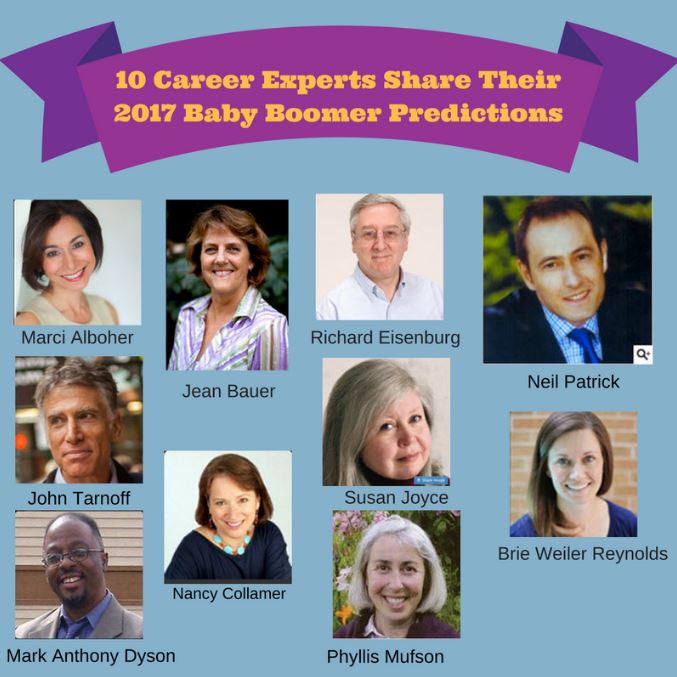
This week I was delighted to be quoted by Marc Miller of Career Pivot in Austin Texas in a post he put together with predictions from several career experts (and me) about the world of work for 2017. Mark had asked us all for our thoughts and I was happy to provide mine.

You can see Marc’s post here:


I was intrigued to see what others had said. My co-contributors were mostly well known to me and I have Skyped, emailed and collaborated with Marc and many of them in the last couple of years. I respect them all and value their friendship towards me - the oddball.

I am the odd man out for at least three reasons:

  • I am a Brit not an American
  • I am not a careers coach, HR person, or recruiter
  • I have no officially recognised accreditations in this field

In fact my day to day ‘normal’ work has nothing to do with careers at all – I am by profession a marketing person.

I chose to set up this blog about the world of work because it interested me. No more. No less. Yet conventional wisdom is that a marketing person who blogs should blog about marketing.

Perhaps I made an elementary mistake. Or I didn’t…

I confess this is post-rationalisation (a dodgy habit at best).

But here’s the thing. I have ventured beyond my comfort zone, I have been stretched. I have learned new things. I’ve not been constrained by years of immersion in a topic. I have come at it like an over-excited kid for whom everything is new and interesting.

I have made many fantastic new friends along the way that I would never have encountered by sticking to marketing. I ask questions that if I knew better, I probably wouldn’t. My personal network has been enriched and diversified. My mailbox is constantly full of interesting things people send me for discussion.

And because I don’t share the same background as others in the field, I come at the subject from a different perspective. And as a marketing person, I know that being different has a special value of its own.

When we are young, it makes sense to focus our network building on our field of specialism. But when we are older and perhaps looking for something fresh and inspiring, we benefit more by venturing into new fields and delight in the discovery of new people and new things. And this restores the excitement in our work which we may have lost way back when.

All it takes is the courage to risk ridicule and rejection. But my experience is that like most fears, this terror exists only in our heads.

On reflection, I have no regrets at all.


How to alienate 99% of the people you want to like you online


By Neil Patrick


I have never written a knee-jerk post about anything. Ever.

But this post is going to break that mould. No research. No references. No editing. So forgive me if this isn't the most elegantly written post from me you have ever read.

But critically, you can read it without any interference or demands from me at all.

That's good I think.

This is a very simple message. For anyone who has a website:

Don't push people away who are trying to help you.

Duh. Sure you know that right?

But if you stick with me, I am going to explain why more and more websites are devaluing their brands and alienating almost everyone they want to influence.

I am a big user of social media. I tweet everyday. And I like to share content which I think is good and may be useful to others.

But I don't share just anything, regardless of who posts it. I may like it myself, but that's not enough. I exercise some discretion and try to decide if it will also be useful or interesting to my connections and followers.

So I actually read posts before I decide if I will share them or not.

Just now I saw a tweet with a website post link which I thought looked interesting. I thought to myself, "this will interest others and if I like it, I will share it online". The deal was almost done before I even read the content. The title alone had seen to that. Good work!

I clicked the link to read the post.

I arrived at the website.

Then bang!

Up popped a 'Subscribe now!' message.

I closed the box and started to read through the post.

BANG! Up popped another message, this time more insistent and covering up all the content I was trying to read.

Can I find the close tab? Um...hang on. No. Keep looking. Ah! There it is (cunningly disguised away from the box). Click.

The box closed and invitation to talk to an advisor appeared. The scroll also locked. Damn.

No I don't want to subscribe or talk to an advisor.

I just want to share this post. And since I have quite a lot more followers than you on Twitter, that's helpful yeah? No charge. Just a little bit of help for you.

But now I won't because I don't want anyone who follows me on Twitter to put up with this BS.

So goodbye.

I know. We've all had this experience. It's almost routine.

I know that content costs. That websites have to make money. But this sort of nonsense just makes me hate you.

The origins of this insanity and desperate marketing is a redundant marketing concept which came into being in the early days of the internet. This was a time when businesses thought the internet worked the same as every other piece of old media.

So businesses decided they should use online content as bait for lead generation. Basically the creation of lists of people they would then send junk mail to. Either electronically or sometimes if they were rich AND dumb, envelopes onto doormats.

The problem with this is that for every post view, perhaps just 1 or 2 percent of readers (if you are lucky) will think, "I love this so much I really do want more of it coming everyday into my mailbox"

Which leaves the other 98 or 99% who visited and just like me, got really hacked off...

If marketing is about making people love us, this is worse than bad, it's brand destroying.

What this misses is that the internet in the era of social media is two way communication. It doesn't work when you try to bludgeon us into submission by forcing us to do what you want. It works when you help us to do what we want.

Basically when you make it easy for us. When you treat us nicely, with some care and respect.

Especially when all we want to do is help you out a bit.

But now I won't. Not today. And probably not ever.

Goodbye.


Why take the flak for the politicians?


By Neil Patrick


Politicians won't like this post. At all.

Whether its Trump vs. Clinton, Brexit or Remain, gender politics, millions of people every day are busy making themselves enemies online by taking a stand for their political beliefs.

Do we really want to lose friends and make more enemies by doing politicians' dirty work for them? If you do, that’s fine. Stop reading this right now, because you’ll probably hate me when you have. And I really don’t want that to happen. Honestly.

Don’t get me wrong, I think it is good to stand up for what you believe in. UNLESS it’s your political views AND you are doing it in public. Then we make ourselves targets for everyone who doesn’t agree with us.

And in the online world, one thing is a sad fact of life; many more are quick to attack than are quick to praise.

But I’m not talking about the morons who troll people. If we are adults, we should be able to take trolls in our stride, regardless of how venomous and threatening they appear.

No, I am talking about others we are connected to online who just like us are good, decent, honest people who mean well. They just don’t share our political views. That’s all.

If your social media presence in any way involves anything other than chatting with family and close friends, there are lots of things which could go on a list of don’ts. And we’ve mostly seen these many times before:

Don’t abuse others. Don’t criticize people. Don’t be a bigot. Don’t be racist, sexist, ageist or anything else which ends with ‘ist’.

Don’t be cruel. Don’t endlessly advertise yourself. Don’t share junk.

Don’t ignore others. Don’t be unkind.

Basically, don’t be an ass.

If you have intelligence and integrity these things are pretty obvious. And they are as much sensible rules for life as online behaviour.

But there is one thing that isn’t on this list which I think should be:

Unless it’s your job, don’t discuss your political opinions in public online.


We all have our political views. And I know some very fine people on social media who do this a great deal and have a lot of followers.

But the problem is that when we discuss politics online, for every person who agrees with us there will be most likely one or more, who doesn’t.

Do you wish to alienate yourself from them just because you have different political views? Some of my best friends over the years have completely different political opinions to myself. And we have enjoyed many fierce debates together.

But these are people I am close too. People whose opinion of me is based on long-standing relationships based on mutual trust and respect. People we have these close relationships with will not suddenly spurn us because we don’t agree on a political point.

These people have a multi-dimensional relationship with us. That relationship is usually a rich and mature tapestry of intermingled life events. They are based on much more than a single online post, comment or tweet.

By contrast, many of our online contacts are brief and fleeting. Often people who will see our social media content know little or nothing about us. But the moment we share something political, we risk alienating ourselves from almost everyone who has a different opinion.

Yet in every other respect, these people may very well be good, decent, folk with whom we would otherwise have a positive and productive relationship with.

If you really cannot resist expressing your political opinions online, then do it through DMs with those who you trust. There you can freely express your views without the world seeing and judging you.

As the US elections approach their conclusion, I see many tweets supporting or condemning one or other candidate. Some I agree with. Some I do not.

But if I express my opinions on social media and in public, I am pretty sure that at least some of the people I am connected with will disagree with me. And for many, such disagreements are terminal to the relationship.

And it never needed to be like that.

Have your political views. Pursue your political causes. Vote and support the politicians you think deserve it.

Just don’t do their dirty work for them and risk your friendships for a political cause.

Because ultimately our friends are more valuable to us than any politician.


The secret of influence everyone forgot


By Neil Patrick


Go and take a look at your Twitter feed. Do it now.

Scroll down the tweets in your feed and look at the little icons beneath each tweet.

Notice anything?

I'm willing to bet that most tweets you see will have zero shares, zero likes, zero comments.

No-one sees or is interested in 99% of their Twitter feed. This fact is a problem for the posters. And an opportunity for everyone else.

The explosion of online content (and the platforms’ manipulation of it for their own ends) means that only the very highest profile people and most active posters get much engagement with their social media output.

And this simple fact is in my opinion the most overlooked opportunity to create online influence.

This isn’t a marketing or media blog. So why am I bringing this up?

Because this current state of play is a huge opportunity for anyone who wants to build influence online. And online influence translates to offline influence more than ever.

If you are serious about your career, how much better placed are you if the internet recognises you as influential in your profession?

You’ll have a bigger network. A more authoritative voice. And the ability to help others.

Notice the last point. Help others.

Not ourselves. As the global marketing director of one of the big four global consulting firms once said to me about her firm’s social media,  "We have too much media and not enough social".

She summed up the situation perfectly. Her firm employs thousands of the best and brightest minds globally. Their daily production of expert and insightful material posted online far exceeds what I could produce in a year.

Yet when I looked at the social media influence of even the most active and established people people at her firm, almost none had achieved any significant online influence.

They were all putting high quality and interesting content online. But no-one cared. Their impact was virtually zero. It was because they thought that merely creating and posting things online was the whole task.

It isn’t.

Online influence is the outcome of positive interactions with other people, not fire and forget. And as Dale Carnegie wrote in 1936, "You can make more friends in two months by being interested in other people than you can in two years by trying to get people interested in you".


So if you want to be influential online don’t follow the herd. Show your network that you care about them more than yourself. It is actions more than words which determine how others see us.

Decide who the people and organisations are that are potentially valuable to you. Put all of them onto a Twitter list. Call the list something flattering, such as ‘My favourite people online’.

Forget your main Twitter feed. Instead when you go to Twitter, go to your list and you can see what all of your important accounts are tweeting.

Share the ones you like. Better still add a positive comment.

This task takes no more than about 10 minutes a day.

Do it daily and the people you want to build a relationship with will notice. Sooner or later they will reciprocate. At the very least they will remember you and think well of you.

A similar approach applies to Linkedin. Last night as I was going through my new invitations to connect on LinkedIn, I came across an invitation from a lady who was a singer/songwriter. On the face of it, I have no reason to connect with such a person. Nonetheless I accepted.

But I also sent her a message thanking her for connecting with me and offering to introduce her to someone I know who is influential in the music biz. She was thrilled at the unexpected offer.

How often have others done a similar thing for me at our first encounter? Hardly ever.

Which is the whole point. In the space of 10 minutes I had been able to help out two people. Perhaps the introduction will be fruitful. Perhaps not. That is up to them. But this simple gesture of goodwill cost me nothing. For me there are no downsides.

In itself, this gesture won’t change my world. But because I do such things almost every day, I accrue goodwill from an ever increasing number of people. And that cumulative goodwill does amount to a great deal.

Almost daily, I am approached by others with requests for help. Offers of collaboration. Business enquiries. And even the postman must be confused by the number of packages that arrive from all over the world, when people send me things as gifts of thanks.

Recently I met with a director of one of the world’s biggest recruitment firms. At the end of our meeting, he said, "I follow you on Twitter - that’s how I knew about you". I was somewhat embarrassed that this fact had escaped my notice. He had noticed me, but I hadn’t noticed him.

But if he had ever engaged with me on social media, I would have certainly noticed.

If these anecdotes still don’t convince you, I have one final argument for adopting this approach - it’s a great deal easier and much less time consuming to be kind to others online than it is to create a new piece of content that goes viral.

And if you want a guide to social media, the best book about it was written in 1936. It was called simply, ‘How to Win Friends and Influence People’.

‘Nuff said.


The secret to HR success on social media


By Neil Patrick

I spend far too much time highlighting and criticizing the poor treatment of people by businesses and organisations. So for a change I am delighted today to present proof of how actually caring about people delivers the sort of profile and positive attitudes that most marketing and HR teams would kill for.

It's nothing fancy. It's not done by a big and clever marketing company. SYLKA Carpets, in Chelmsford is a 3 year old company making carpets for hotels and large houses.

Right now on LinkedIn, Sylka Carpets are getting HUGE profile simply because they cared enough to give a guy called Frank a job:


This post on Linkedin has received over 16,000 likes and over 1,000 comments every one of which (okay I haven't checked every one, but I'm confident this is so) is praising SYLKA Carpets for doing something decent to help someone out when they lost their job.

You simply cannot buy or make this sort of social media success. Not unless you are willing to behave in a decent way towards people. And next time I am talking to someone about HR and social media, this example of truly best practice will serve me well I think.

Thank you SYLKA Carpets. And good luck Frank!


Pity the Twitter Zombies


There are a lot more zombies than trolls lurking online...

This morning I intended to write about the economic situation in Japan. But as sometimes happens, I got distracted by social media. So I am sorry if you are dying to read about the Japanese economy, but I promise I will get back to that asap (stop groaning!).

Yesterday evening I spent an enjoyable couple of hours drinking beer with Katrina Collier of Winning Impression. Katrina is one of a small elite band of people I consider to be true experts on social media for recruitment and HR. If you are in either of these fields, you really should be connected with her. Here’s a link to her website.

As we chatted, both watching our social media feeds at the same time, Katrina was laughing as she observed Twitter trolls tweeting all sorts of hate to her after she retweeted the petition to keep Donald Trump out of Britain.

Katrina’s an Australian and if I know one thing about Aussies, it’s that they are not easily intimidated. When you grow up surrounded by countless species of creatures which are mostly looking for people to kill, I guess this is understandable.

Yet this was also an instructive situation. The more the hate poured in, the more she laughed. And I ventured that this explosion of Twitter troll activity would do her Twitter metrics no harm at all. Algorithms do not care whether we are generating online love or hate. They just count impact.

The trolls were inadvertently boosting Katrina’s online influence scores with every drop of bile they spat at her. She could laugh with good reason.

When the mainstream media is full of stories about cyber-bullying, the popular message is understandably that we must protect the vulnerable from such things.

But if you are big and grown up enough to take such things in your stride, if you are not easily intimidated, trolls and bullies do us no harm at all. In fact they help us for the simple reason that AI cannot yet always distinguish between love and hate.

This little story came full circle this morning as I reviewed my new followers on Twitter.

This is a daily task for me. Every day there are 30 or 40 new followers. Most are what I call “randoms” – people who are following as many people as possible in the hope that a percentage will follow back and artificially make them look more popular than they actually are. I have written about these ‘binge and purgers’ here and what you should do with them (tip…Don’t follow back ;-))

Another friend of mine, the ever clever Matt Ballantine tweeted the other day:


Matt is bang on the money I think. Most people like to feel popular, but many are in reality terrified that engaging in real dialogues on social media could:

  1. Stir up hate – (don’t worry, at least you believe in something) 
  2. Expose them as not being an expert on everything (don’t worry, no-one is) 
  3. Meet people they’d rather not (don’t worry, you can block them) 

As I reviewed my new followers, I looked at the ones who looked genuine and interesting and then looked at who they were talking to and about what.

And this is where most fall down. I don’t expect anyone to spend hours and hours every day chatting on social media. Not if they have any sort of life. But I do expect to see something that shows they are not a zombie.


Time and again, I see tons of tweets, but zero conversations. It’s as if these people would rather stand there talking to themselves than risk the imaginary terror of the things I describe above.

If you like talking to yourself, be my guest. But really what’s the point? If you are doing this you have become a zombie.

We shouldn’t be afraid of trolls. And we should pity zombies.

All of them used to be people, once.


PS. More proof of this trolling backfire emerged this morning when The Daily Telegraph featured Katrina's tweet in its piece about the Donald Trump petition. Nice one Katrina! :

http://www.telegraph.co.uk/news/uknews/12041412/Petition-to-block-Donald-Trump-from-entering-the-UK-hits-100000-signatures.html


Computers are learning to read our minds and why this changes everything


By Neil Patrick


In the digital age everything is reduced to numbers. Big data counts everything that can be counted.

But big data conceals as much as it reveals. Big data scientists argue that their algorithms enable fine judgements to be made across billions of pieces of data. Yet there is idiocy embedded within many algorithms.

Many of us find ourselves enraged by the clumsy ways simplistic counting algorithms determine who gets noticed online and who doesn’t.


This quantitative analysis is the strength of big data and currently its main weakness. But most algorithms cannot count the things that are often most important, i.e. the qualitative aspects. Like value, trust, goodwill, personality.

But this is about to change…

IBM Watson has already built artificial intelligence that does exactly this. It’s called Personality Insights. Follow this link and you can try it out. Just load a thousand or so words of a blog post or something you have written and the programme will analyse and quantify your personality.

I put it to the test with one of my own blog posts. This is what it said about me:

You are inner-directed and skeptical.

You are empathetic: you feel what others feel and are compassionate towards them. You are philosophical: you are open to and intrigued by new ideas and love to explore them. And you are calm-seeking: you prefer activities that are quiet, calm, and safe.

You are relatively unconcerned with tradition: you care more about making your own path than following what others have done. You consider independence to guide a large part of what you do: you like to set your own goals to decide how to best achieve them.

I could pick faults with this analysis maybe. But broadly speaking, I was impressed by how well it managed to interpret who I am and how I think.

The Personality Insights programme isn’t the end of the road. It’s the start of it. AI is going to become perfectly capable very soon of understanding the very essence of who we are, how we think and what motivates us.

Imagine the implications of how when sooner rather than later, software such as this is incorporated into social media platforms, into blog platforms, into LinkedIn?

The currently clumsy counts of likes, followers, shares etc could be supplemented by rich data which permits far more nuanced metrics about us.

The way will be open for platforms to group, sort and rank us in ways that they have never been able to do before.

And the gamers who exploit the clumsy metrics will be put in their rightful place.

But only if the platform owners recognize and seek to rectify the simplistic and unhelpful ways they use big data to judge who is important and who isn't.

We have to hope they use this power for our good and not just theirs.


Why Linkedin best practices are a myth


By Neil Patrick

There’s no universal social media best practice, so stop looking for one

Last weekend over coffee, Gary Sharpe of Blue Dog Scientific and I were discussing LinkedIn Pulse. I think it is fair to say Gary has established himself as something of a renegade authority on LinkedIn.

He is an agent provocateur, evangelist, firestarter. He’s also a champion of fairness, a scientist and a driven man. He has an uncanny knack of spotting elephants in rooms that only when he points them out, do the rest of us recognise them.


Dr. Gary Sharpe of Blue Dog Scientific


Gary and I have shared values and core beliefs about things like authenticity, trust, collaboration, transparency.

We have also independently evolved entirely different ideas about how we use social media platforms in our day to day businesses.

It’s not that we disagree about much, but rather that we have totally different manifestations of our online presences.

Gary’s online presence mirrors who he is, what he cares about and what he wants to achieve. And so does mine. Neither of us copied any best practice or more prominent thought leader. We each figured out our own strategy that was right for us.

So who is right and who is wrong?

The answer is that we are both right. Because there is no such thing as a one size fits all solution.

But as friends and collaborators, we thought it would be interesting writing some content for each other. Gary has posted about our shared ideas and beliefs here. If you want to get some really authoritative insights into Linkedin, then you'll find much of interest on Gary's blog.

Why it is good that we are different

Gary has a great deal more courage than I in how he has taken on his mission to improve everyone’s user experience of LinkedIn. He ribs me that I am risk averse. I rib him that he plays with fire too much.

The fact is that we are each being true to our own personalities and backgrounds. If I tried to be Gary, I would inevitably be at best a weak impersonation and at worst, come over as a complete fraud. And vice versa.

Why I don’t post on LinkedIn Pulse

I write a lot of blog posts – there are around 400 on this blog alone, not to mention a ton of others scattered all over the web. But you won’t find me posting on LinkedIn Pulse. Gary on the other hand posts on Pulse almost daily. Often with biting critiques of the very platform he is publishing on.


My rationale for not posting on Pulse is this; I believe that LinkedIn like any corporation serves its shareholders first. Second it serves its customers. At best, its members (that’s us) come a very lowly third.

And as Gary has consistently reported, we users are getting an increasingly poor deal as LinkedIn continues in its quest to drive up revenues and profits. Worse, when we publish on Pulse we are providing our labours to LinkedIn for peanuts.

They acquire our content by the bucket load every day. We get an increasingly paltry compensation for our hours of toil. Our work may bring us a few comments and plaudits from our friends. We may trigger the odd new contact who likes what we have said. But this is a very poor ROI in my view.

My mantra is this:

Don’t build your house on rented land. Especially when the landowner has absolutely no vested interest in retaining your goodwill.

How I connect with people without using LinkedIn


We all want to find and build worthwhile professional relationships. This makes LinkedIn the natural platform choice for most of us. And just as Gary has built his following and network through his blog, LinkedIn and Google plus, I have built mine through my blog and Twitter.

I consider LinkedIn “high stakes” social media. The most senior people are rarely on the platform. They are too busy being successful. And most other people don’t want to be pestered by strangers. Either to connect or to read our latest musings, however profound or insightful they may be. People want choice and they want control. I get that. And I respect it.

Send out too many invitations to connect with people you don’t already know and you’ll potentially be classed by LI as a spammer, especially if you trigger a few IDKs (that’s when an invitee responds with the “I don’t know this person” button).

So I never invite connections from someone on LinkedIn I don’t already know from somewhere else. And the result is that I may have a smaller LI network than some, but it’s with people I like and who hopefully like me. This is the foundation for relationships which are meaningful and valuable.

Twitter on the other hand is low stakes. Every day I gain about 30 or 40 new Twitter followers. Most are what I call ‘randoms’ – people whom have absolutely no reason to follow me, because we have nothing in common. Yet within those 30 or 40 will always be 3 or 4 people I do want to get to know better. Many of these people subsequently request to connect with me on LinkedIn because I am nice to them on Twitter – I comment and interact with them. I share and favourite their posts that I like. Everyone is happy.

Why LinkedIn is still immensely valuable to me

A few weeks ago, the CEO of a business in my locality posted on LinkedIn he was looking for a board level marketing consultant. He wasn’t a first degree connection of mine, so despite this being exactly the sort of work I specialize in, I never saw his post. The first I knew about it was when people I was connected to started recommending me.

Within a few hours, four people who knew me well had all put my name forward. And sure enough this led to a meeting and the start of a valuable business relationship.

None of this happened because I had posted on Pulse. It happened because people in my network thought enough of me to put me forward. For all sorts of reasons, they had goodwill towards me.

We win goodwill not by brilliance, but by caring about others

The thing that each of the four people who recommended me for this gig had in common was that in different ways, I had helped every one of them previously with their work. In some cases, it had been advice, or I had previously worked with them. In others, it had been simple friendship and encouragement.

This was no clever strategy on my part. It was no brilliant post which established my authority. It was just people being nice to me, because in the past I had been nice to them.

My approach to social media works for me because it reflects who I am and what I want to accomplish. Not because I have copied anyone else’s strategy. And Gary does the same thing. So we are entirely different but also entirely the same.

Vive la difference!


Nasty Twitter tactics to watch out for


By Neil Patrick

I’m on Twitter daily, so I get to observe in sometimes gory detail how various folk use and abuse it. And lately I've noticed a nasty and cynical tactic getting more prevalent.

It’s the latest incarnation of what I call “binge and purge”.

It’s easy to spot when a Twitter account is doing this. When they follow you, scroll down their time line and you'll see how many people they followed at the same time they followed you. Binge and purgers will typically follow accounts en masse. Several hundred a day. Day after day. I’m sorry to tell you that despite following you, they are not interested in you and what you think or have to say. They just want to get as many people as possible to follow them back.

They have naively concluded that having a zillion followers trumps everything else. Big mistake.

It’s a bit like having a rather lame party or event to organise for 100 people and knowing that few people will really want to come. So you send out 1,000 invitations, because if you only sent 100, only 10 people would actually show up.

If you want to go to a lame party, be my guest.


The binge and purgers’ error is that they see celebrities and famous people as their role models.

As I talked about here, there’s a mass of celebrities and other famous people who follow very few people on Twitter. But because of their high public profile, they don’t actually need to do very much to get a lot of followers on any social media platform. They don’t really engage; they just tweet all about their daily lives. And their followers are essentially engaging in a form of voyeurism. It’s a lucrative formula which is exploited by thousands of gossip and celebrity magazines and websites all over the world.

And whilst I think this is a completed wasted opportunity, I get it. They see it as a low cost and easy way to help keep their face out there.

I have said it before, and I’ll say it again. They are social media role models for no-one.

But sadly, many ‘normal’ organisations and people who ought to know better, have taken this non-typical and flawed model and assumed that social media success is about having a zillion followers, whilst following as few people as possible. I recently read a post which asserted that unless a Twitter account had 10 followers for every person they followed, it was not worthy of being followed.

This is absolute nonsense.

Why?

Because it makes a second flawed assumption that social media is like old media. In other words, a newspaper which has a higher circulation deserves to be paid more for its advertising space than one with a lower circulation. In old media this was more or less true. In social media, it’s also complete nonsense.

Why?

Because social media is about relationships and people, not old school advertising. It’s active not passive. It’s real time not scheduled. It is collaborative. And it is not, repeat NOT about me, me, me. It’s about US, US ,US.

It’s not an advertising vehicle.

It’s a place where we can grow our networks of friends, learn from each other, get feedback from our customers, share information, build communities, watch our rivals, help our friends and best of all sometimes just chew the fat…together.

Binge and purgers neither desire nor find any of this. Because they are on an ego trip.

Goodwill not reach is the measure of online influence - unless you are using social media in completely the wrong way. And you do not acquire goodwill by dumping your followers within a day or two of them following you back. It just leaves a nasty taste in the mouth.

It’s the industrialisation of social media. A cynical and exploitative attitude where connections (that’s you and me) are viewed as raw material. And this mechanical approach kills the very thing every genuine decent person or organisation wants; real relationships, based on trust and mutual goodwill.

I can only see this cynical, exploitative and idiotic trend continuing. But all is not lost. Just keep an eye in your new followers for a few days and watch which ones have quickly unfollowed you. There’s your proof they are a binge and purger. Dump them immediately.

And don’t get sucked in to the mythology that you can’t be awesome unless you have a zillion followers.


Why you shouldn’t follow famous people on social media


By Neil Patrick

I observed an interesting thing this morning on Twitter. I found myself looking at a few verified Twitter accounts. In case you don't know, these are the profiles with a little blue dot on them and a white tick inside it.

Apparently Twitter allocate these at their discretion to the accounts of well known people so that we know that this is their real Twitter account not a faker or imposter trying to hijack their fame.

Actually you don’t have to be especially famous to get this. If you’re a broadcaster, actor, newspaper journalist, sports personality, you’ll probably have one.

But the little white tick is not a quality or merit badge. It just tells us that the person is well known and they are who they say they are.

It doesn’t mean they are worth following on social media.

A famous person yesterday (possibly)


When I looked at a dozen or so of these accounts, I spotted a few things they all had in common:
 
  • They have many, many more followers than people they follow. This tells me they are not interested in what anyone else has to say. It doesn’t tell us that they are actually saying anything worthwhile. 
  • They rarely share or comment on anyone else’s tweets. In other words, they are not interested in anyone else or engaging with others. 
  • Their tweets are all about the boring details of what they are doing and/or how fabulous their life is. Hello? We don’t care (except for the minority of stalking obsessives that is) 

When I look at the people on social media who I follow and am interested in, almost none of them are verified accounts. They may have less than a hundred followers or several hundred thousand. But these are the truly fabulous people. The people who provide us with things that are interesting, valuable and helpful.

These people understand that we must give to receive. That no-one cares about the details of their day to day lives. That social media, just like real life is a two way street.

These people enrich my life every day. When they engage with me, they make me feel good. They inform and challenge me. They show me that they care about others more than themselves. That’s why I like them and that’s why I follow them.

Whether their Twitter profile has a little white tick or not.


Is social media a bubble and what does that mean for us?


By Neil Patrick

I love social media. But I’m worried it's becoming a bubble. Over the last couple of years, it’s been displaying some typical features of bubble-like behaviour.

We’re witnessing endless expansion of the main platforms. A rush of investor cash into ‘the next Facebook’. Irrational IPO valuations. A sense that we must get in or miss out. The rise of exploiters and gamification. Rising quantity but falling quality of content. And an ever rising number of scammers, fakers and fraudsters.


Gary Sharpe posted his take on this phenomenon the other day:

The evils of the social media scene have made the networks places of corruption, vice and crime. The levels of fraud, returns-on-incompetence, digital de-reputation, self-servicing, rip offs, anti-knowledge, time wasting, money-down-the-draining, preying on the weak/naive/desperate, copy-cats, liars, cheats and ill-informers has reached epic proportions.

Gary never minces his words!

I track stock market sentiments about social media platforms and there’s some definite nervousness showing especially around Twitter:


Only one platform, Facebook has managed to deliver the sort of revenue growth that investors expect to see. All the other platforms are struggling to meet this key objective.

Another of my respected online friends, Jesse Colombo, Forbes columnist, analyst, and bubble expert had this to say about LinkedIn way back in 2012: 

The general public, in my view, still has irrationally high hopes for the commercial success of social media companies and LinkedIn, one of the last vestiges of the social media dream, is expected by many to carry the torch for the sector going forward. These irrationally high hopes can certainly be seen in LinkedIn's astronomical 1,000 P/E ratio (source), which is far too rich even when taking into consideration the company's healthy expected 5-yearearnings growth rate of 64.69%. Richly-valued growth stocks, such as LinkedIn, have a strong tendency of plunging if there is even a slight disappointment in revenue and earnings growth.

Jesse’s cautiousness about Linkedin has proved to be well founded. Just look at the stock value since he wrote this in 2012:


Now I am assuming that you are neither an investor, nor a shareholder in social media.

But you are probably a user.

And if your use of social media has any sort of connection to your business or career this stuff matters.

So this post is about my take on what I see ahead and what we as users should do about it to protect our vested interests.

The outlook

First I see some consolidation ahead as undercapitalised platforms get acquired by others who see potential synergies arising from such acquisitions. The struggling share valuations make such acquisitions more and more likely. The worst case scenario is an event triggering total collapse of investor confidence in the sector. If you think that’s unlikely, think Lehman Brothers.

The implications

Weak revenue and profit growth is the principal reason for growing investor disillusionment with social media firms. This means that we can fully expect to see a steady rise in things we as users mostly don’t like – limited free access, more paid-for elements, more demands for personal data to access content and apps, more intrusive advertising, higher quantities of junk content.

More intrusive data capture

All data has value. And when you're a social media platform owner you have bucketloads of it. Better still you acquire it more or less for free. And you can secure pretty much unlimited rights over what you do with it - provided you describe these rights within a long and legally dense set of user terms and conditions which no-one ever reads, yet still clicks the “I agree” button.

More noise

We are already at saturation point. The sheer volume of content pumped daily into my social media channels is completely beyond my capacity to consume any but a truly tiny fraction of it. All our capacities to consume media are finite. But the supply is rising exponentially. The only possible mathematical outcome is a continual fall in the overall level of media consumption as a share of what’s produced. In other words, if you produce online content, you can only expect your overall consumption levels to fall in future.

What to do about it

So against this backdrop, there seem to me to be several sensible actions to take if any of your career or business interests are connected with social media:

Build real communities that share your beliefs

Having a million Facebook likes, a hundred thousand Twitter followers and 10,000 Linkedin connections, is going to become less and less valuable, unless they are a truly connected audience that has active goodwill towards you.

Earn your goodwill by being kind to your online friends

Goodwill isn’t created by people being so amazed at your profile stats, that they are wowed into following or liking you. Goodwill is created by showing people you care about them.

Focus on quality over quantity

The exponential growth of content and the finite capacity of people to consume it, means that content quality will become increasingly important.

Build trust

We don’t create trust by slick presentation, or shouting about how great we are, or bludgeoning people into submission with sales messages. We create trust by our actions that show we care about the people we are connected with. And by being willing to help them, whilst asking for nothing in return.

Own your own media

Social media platform owners have all recognised that crowdsourced content is a fabulous (free) source of assets for their businesses. By putting our work onto Facebook or Linkedin, we are surrendering our ownership of that media and placing our fate in their hands. And if you have any sort of online content, it’s essential that you own its domain. In other words “Don’t build your house on rented land.”

I’m not saying don’t post on Linkedin or Facebook, I’m just saying that if that’s all you do you cannot realistically expect to see value growth from these activities in future. The only sensible decision is not to have all your eggs in someone else’s basket(s).

Expect change - permanently

It’s easy to forget that social media has already had a string of casualties in its brief period of existence. Remember MySpace? Friends Reunited?

I believe that social media platforms have lifecycles. But because the pace of tech change is now so rapid and mature platforms so slow to change (Facebook is apparently working on introducing a ‘major innovation’ - a dislike button), I think there will be more casualties sooner than we might think.

When we try and predict the future, we are almost certain to be wrong. But I hope these observations are at least helpful in framing your own expectations and actions in the coming months and years.

I would love to hear your reactions to these forecasts!


The Perils of Facebookisation


My good friend Dr Gary Sharpe at Blue Dog Scientific coined a term the other day in a conversation with me.

It was “Facebookisation”.

He didn’t need to explain what he meant. It’s the spread of trivial, egotistical, self-obsessive social media content creeping out of Facebook and into other and often mainstream media.

It’s the idea that we are all celebrities and should try and emulate them.

Except, most celebrities are hardly good role models at least in social media.

At first, I gave it little thought. It was a nice term though and I mentally filed it away for future use.

Then this morning I saw a Huffington Post newsfeed that Michelle Mone, new Tory peer, successful entrepreneur and founder of Ultimo had recieved a Twitter backlash for "bragging" that she’d been given a ministerial car and driver whilst on an assignment in connection with her unpaid work for the government. (she’s working pro bono on the DWP’s work on stimulating entrepreneurialism).


Apparently, Michelle or more likely her media team, quickly took the tweet down and tweeted this in her defence:


At a time when Jeremy Corbyn’s authentic voice and humble, consultative, non-ego-centric approach is drawing millions of supporters especially amongst the young, we have to question whether the “Look how rich and successful I am” approach to personal branding is really valid in the 21st century.

I suspect this approach just inflames the rage of those who rightly or wrongly feel that ‘the system’ has dumped them on the scrap heap. Does presenting ourselves and showing people how wealthy and successful we are really enable them to achieve amazing things with their own lives?

I'd argue it does not because the faulty premise is that all any of us need to succeed is motivation. And because that is free, we can all access it from within ourselves.

But the real barriers to success are not insufficient motivation. They are things like education, access to resources, contacts, creativity, innovation and know how. Without these things, no amount of self-belief and aspiration will deliver success.

The other key requirement is personal credibility.

Humility, empathy and modesty are in my opinion at the heart of personal credibility. Bragging, narcissism and displays of wealth, influence and success are not.

Even if they are presented with a big grin and 'motivational' message.


Why social selling is not advertising


By Neil Patrick

I have a slide which I use in almost every social media presentation I give. It’s this:


I am looking forward to the day that I can ditch this from my slide deck. That’s the day when everyone has learned that social media isn’t a sales platform.

But I fear that this slide is going to remain in use for a long time to come.

I’m not about to say that social media is a waste of our time and money. It’s not. Far from it. It just should never be used to try and sell people things. It’s a great way to build goodwill, to share information, to get noticed, to have our say and to build communities.

Why isn’t that enough guys?

I get huge value from social media. Because of it, I make great and valuable connections with amazing people all over the world. These wonderful people help me out on a daily basis. And I try to do my bit to help them out in return. Am I going to abuse those relationships by telling them I’ve got a great offer for them? Hell no. I’d rather poke myself in the eye with a sharp stick.

It helps me get my voice heard. It saves me a shedload of money on marketing. Google adwords at £1.80 a click? No thanks.

Social media keeps me up to date on who is talking about things I’m interested in. It allows me to easily follow the thoughts and ideas of people I look up to. It allows people to connect with me and tell me what they think.

Almost every day social media brings me astonishing opportunities that I’d never have if all I did was use it to try and flog stuff to people.

Social media gets me clients and business all the time. But that's not because I advertise, it's because they come to like and trust me. They choose if and when they want to do business with me. I don't presume that they will want to. Or pretend that I can second guess when they will want to.

That’s a pretty amazing heap of valuable benefits I think. Am I going to chuck it all away by naff advertising to people? NO WAY.

So please sales people please stop abusing the goodwill of the people you want to be your friends online.

'Nuff said.


10 tips to out-hip the hipsters


By Neil Patrick

It’s time for us to fight fire with fire. To stop being blindsided by youth’s purported technological superiority.

One of the most persistent and damaging beliefs held by employers is that older people are out of touch with modern technology. Often enough all they mean by this is that we don’t waste too much of our valuable time posting selfies on Facebook and playing Angry Birds on our mobile phones.

This surrogate ‘measure’ of technological prowess is an Achilles' heel for the young though and here’s why.

Young people are not more sophisticated users of social media than older folk. They are just more familiar with the platforms. And waste more time on them. I know. I see what they tweet about. And it’s mostly vacuous narcissistic drivel.

The most famous book on social engagement was written in 1936, by Dale Carnegie and it was called, “How to Win Friends and Influence People”. Is it still relevant? You bet. And because of the rise of social media, I’d venture it is even more relevant today than when it was written.


Dale Carnegie 1888-1955 


If you think your career is just about being good at your job, you are operating in a vacuum. If no-one outside your immediate professional network knows anything about you, you are essentially invisible to the world. And that’s not a good place to be when for reasons beyond your control you are facing a career crisis.

Jobs are about getting stuff done. About influencing. About results. Social media can help you with all these things more than you’d ever believe.

But only if you know how to do it right.

And doing it right isn’t about copying the ‘yoof’.

Time and time again, I find that employers believe that older hires are not as good as younger ones because they believe we are out of touch with the digital world. There is some truth in this too. Older people often have concerns about privacy and this excessively constrains their online activity.

But because this transformation is so pivotal, we cannot run away from it. We have to embrace it and deal with the rough edges. Denial and avoidance are not an option if you want to remain employable in the 21st century.


The good news is that it’s actually not that hard to out-hip the hipsters… and here’s how you can do it.

So here are my top 10 hipster beating ideas for anyone over 40 (and many who are younger) to show that you are more hip than the hipsters and more importantly a good deal more employable.

Put your social media to work for you

Did you know that the average Twitter account has less than 200 followers? Build your Twitter following to over a thousand and straight away, you’ll be perceived differently. 

Make your public online presence mainly about the work you do

Hipsters love to talk about themselves. They can’t help but post selfies of themselves having fun. Don’t copy this. Use your social media to show you are a serious professional.

Spread across multiple platforms

Start at the centre and work out gradually. Don’t leap onto every social media platform at once. Start with the core and gradually expand from there. The core is Linkedin and Twitter. After you are established there, dependant on what you do, then you might want to expand to YouTube, Pinterest, Facebook. 

Get connected

Do not pester people to connect. Be nice to them and slowly but surely they will reciprocate. Share other people’s stuff. Comment constructively. Be nice to others and they will be nice to you. 

Make your voice heard

No-one loves bullies, show offs or big mouths. So don’t be one online. Be more interested in others than yourself and it will get you further and faster.
 
Build online goodwill

It’s funny, but online relationships are actually not much different to real world ones. Help others out and ask for nothing in return. Most will be so shocked and delighted they will remember you if not forever, then certainly for longer than if you ignored them 

Know your numbers

Look at who you consider to be your peers in your professional realm. And your role models. There’s your benchmark. If you have bigger numbers than they do, you are leading your race not struggling to catch up. 

Understand the digital landscape

You don’t need to be a coder or a web designer to do this. As platform algorithms become ever more sophisticated, they are learning how to reward good online behaviour and punish the bad. The meek really shall inherit the earth (provided they are not so meek no-one knows they exist).

Help people solve problems

Every day I am contacted by people many of whom I have never met or even communicated with before. They ask me to help them solve their business problems. I am not a charity yet I never ask them to pay anything for my advice. I place a greater value on their goodwill than I do on filling my pockets. Some would say this is foolish and unnecessarily altruistic. I say that goodwill is more valuable than mere money.
 
Be interesting

Yoof cannot help but try and show the world how beautiful, fun and affluent they are. And guess what, no-one cares*. Their social media role models are the rich and the famous. But yoof has not recognised that different rules apply to these people. For better or worse, fame changes the game.

People like and are interested in people who like and are interested in them. Not people who are mostly interested in themselves and trying to impress others.


The beauty of this strategy is that you’ll kill at least two birds with one stone. First you will learn a ton of stuff. Second, you will be able to prove that you are right up to date with the digital world and critically that you know how to use it to create real influence.

Hipsters watch out! You are about to be outsmarted by those you jeered at.

*A 2013 study of Facebook users found that posting photos of oneself correlates with lower levels of social support from and intimacy with Facebook friends (except for those marked as Close Friends). The lead author of the study said that "those who frequently post photographs on Facebook risk damaging real-life relationships."